Monthly Current Affairs
August 2026 Current Affairs
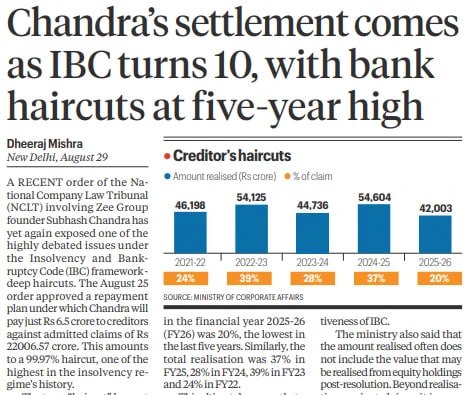
Chandra’s settlement comes as IBC turns 10, with bank haircuts at five-year high
The bankruptcy proposal put forth by Subhash Chandra with a haircut of 99.97% has once again opened the debate on IBC. It throws light on many of the issues relating to resolution versus recovery, related-party voting, and personal guarantors.
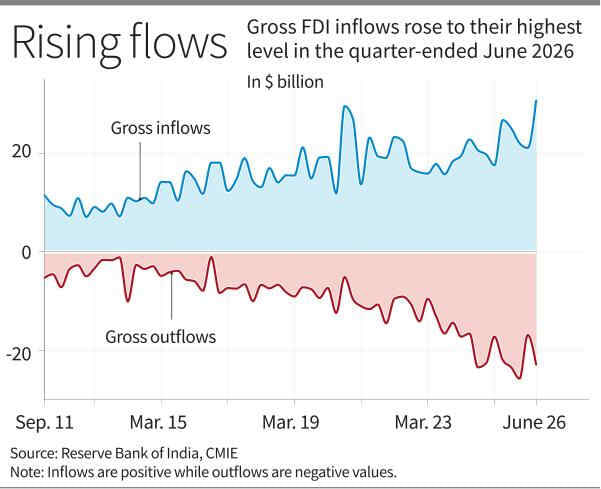
Gross FDI hit 15-year high of $30.7 billion in April-June 2026
Gross FDI inflow into India registered a 15-year record of $30.7 billion in Q1 2026, showing an increase of 46% from the previous quarter, led by the manufacturing sector. Net FDI inflow has become positive with $1.3 billion recorded in June. Challenges are posed by large outflows, concentration of investors, and the requirement for good-quality investments.
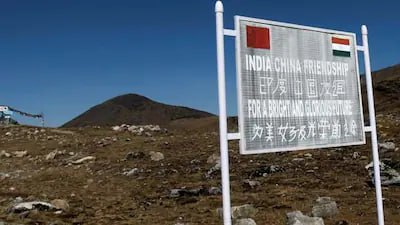
Centre Plans Integrated Command Centres to Boost Border Security
India’s "Smart Border" concept makes use of technologies such as AI, sensors, drones, and surveillance to improve the security situation by building command centres. This concept will begin at the India-Pakistan border but can help address country-specific difficulties (China and Bangladesh) while dealing with the problem of cybersecurity
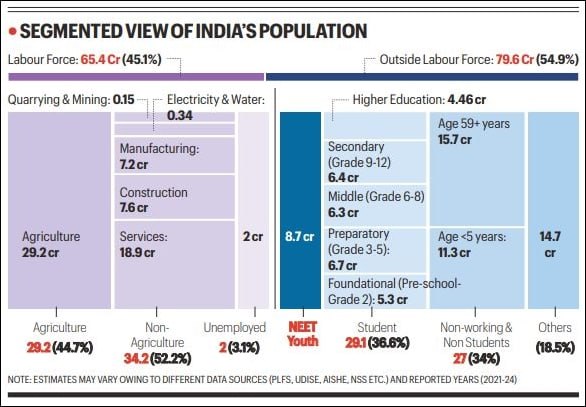
Only 8.25% Graduates Work in Jobs Matching Qualifications: NITI Aayog
NITI Aayog stresses the existence of an acute education-to-employment gap in India, where merely 8.25% of graduates are in occupations that correspond to their education level. With outdated curricula, poor industrial-academic connections and low numbers of apprentices, India needs to adopt a curriculum linked to industries, vocational training and apprenticeship to ensure employability.
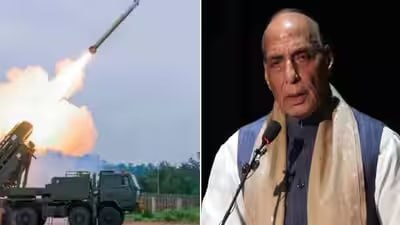
Rajnath Approves Missile Technology Transfer to Indian Companies
DRDO's intention to make transfer of technology available to all Indian manufacturers for all conventional missile systems aims to cover the gap between research and development and production and support industrialisation. The intention supports the involvement of the private sector as well as MSMEs in manufacturing as well as in export of weapons.
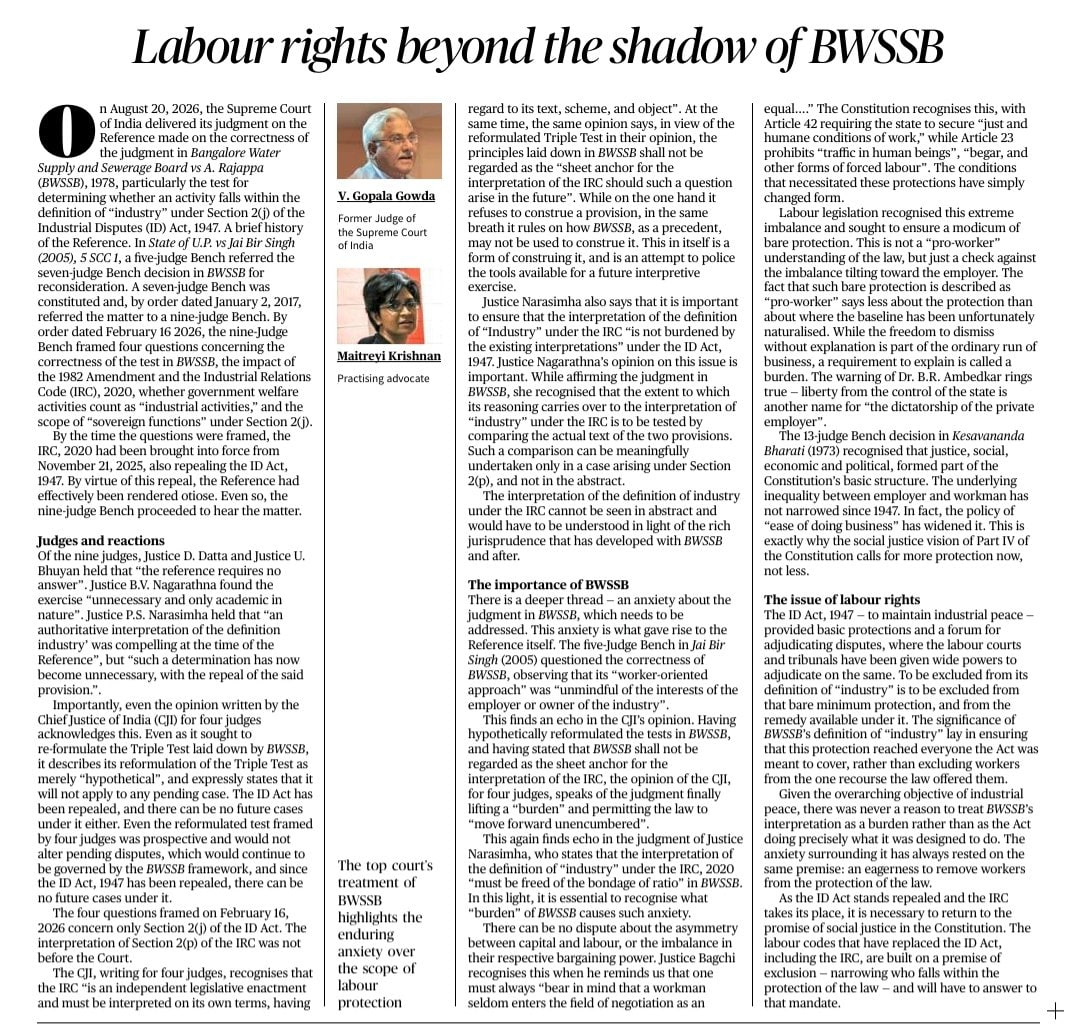
Labour rights beyond the shadow of BWSSB
The Supreme Court’s consideration of the BWSSB vs. A. Rajappa case in 2026 is a manifestation of the tension that exists between the safeguarding of labour and the elasticity of the economy. Despite the scrapping of the Industrial Disputes Act through the enactment of the Industrial Relations Code, social justice remains a constitutional duty.
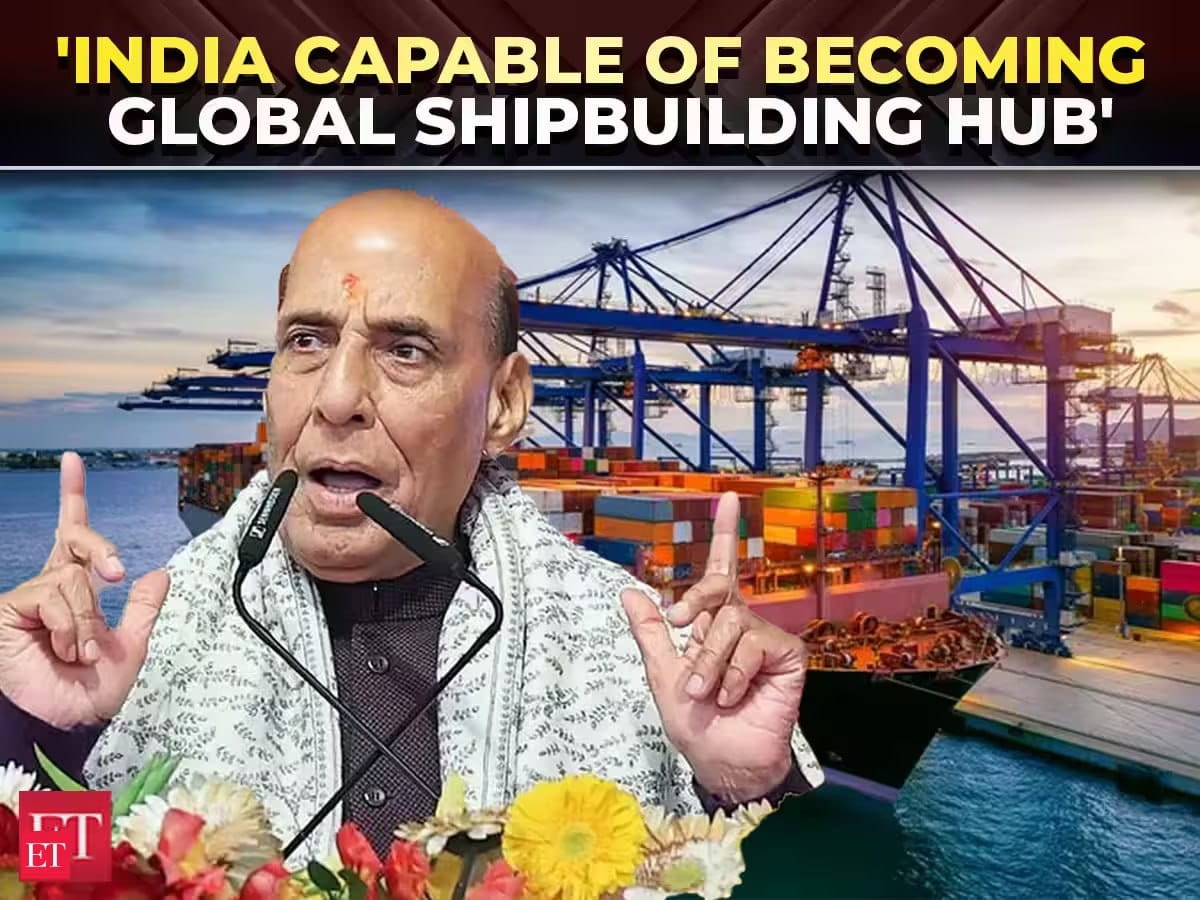
India Can Become Global Shipbuilding Hub: Rajnath Singh
India can emerge as a global shipbuilding centre owing to the decline in conventional centres, strategic autonomy, strong steel infrastructure, skilled labour force, and export prospects. Issues faced include global competition, capacity constraints, and financing. The approach needed includes clusters, PPPs, R&D, policy initiatives, and skill development, moving from import dependence to global exports.
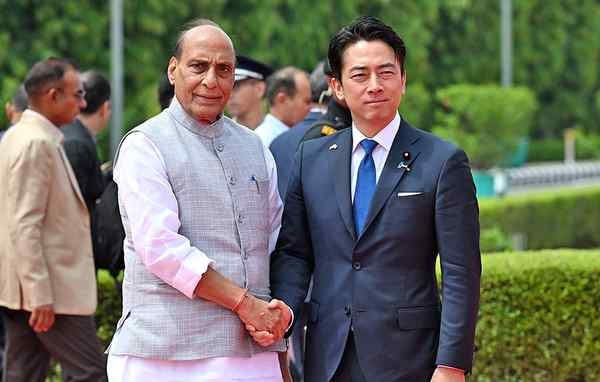
India-Japan Sign Maritime Security Pact to Boost Defence Cooperation
India and Japan signed the Maritime Security MOA to boost defence cooperation via enhanced Maritime Domain Awareness, information sharing, joint exercises, logistics, ship maintenance, Humanitarian Assistance Disaster Relief (HADR), and defence technology cooperation (UNICORN). This agreement will help in promoting FOIP, securing Sea Lines of Communication (SLOCs), and using Japan’s technology with India’s ship-building capabilities under Make in India.
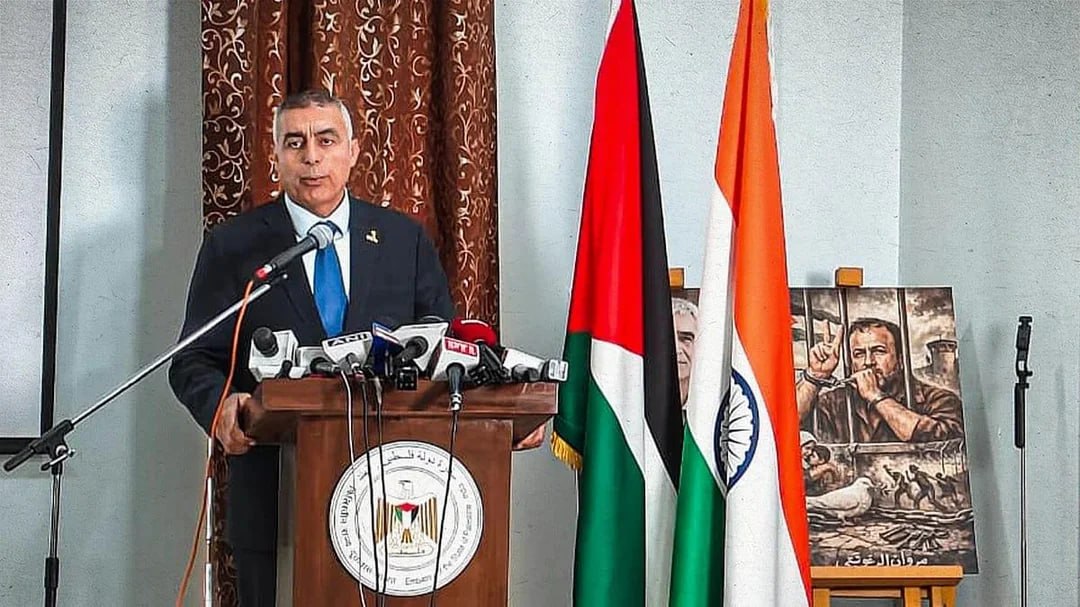
Palestine Backs India’s Bid for UN Security Council Seat
Palestinian backing of India’s campaign to become a member of the UNSC for 2028-29 is going to bolster India’s diplomatic standing and is reflective of increasing cooperation between the countries. India’s foreign policy follows a de-hyphenation approach wherein strategic relations are maintained with Israel even though India backs Palestinian statehood and the two-state solution approach.
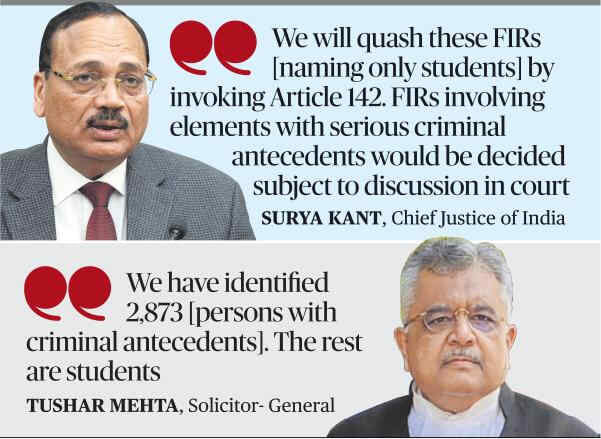
SC to quash FIRs against student protesters
Supreme Court can look into utilising Article 142 for quashing FIRs made against students for their non-violent protests on account of the anomalies associated with NEET-UG. This case has serious implications in terms of differentiating between a non-violent protest and crime, and the conflict between Article 19 rights and maintenance of public order.
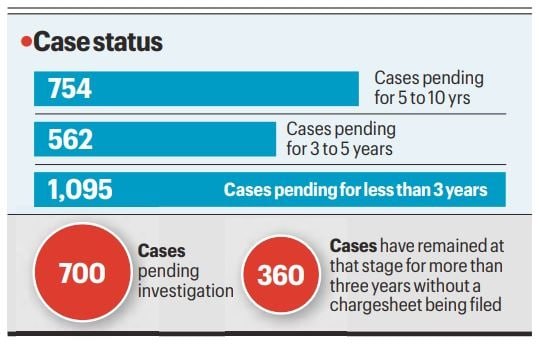
Over 4,000 Cases Pending Against MPs, MLAs | SC Report
The 22nd amicus brief draws attention to the delay in 4,192 criminal cases involving sitting and retired MPs/MLAs, 519 of which have been pending for more than ten years despite directives from the Supreme Court regarding the setting up of special courts. The delay in such cases is due to lack of capacity, investigative hurdles, adjournments, and poor monitoring.
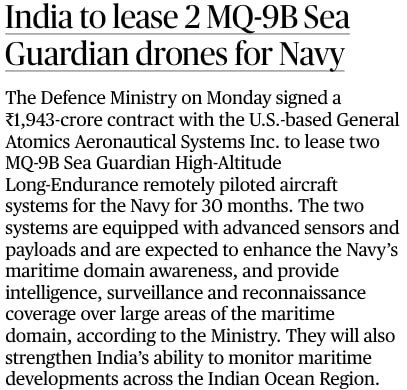
India to Lease 2 MQ-9B SeaGuardian Drones for Navy
The Indian government has finalised a lease contract of two MQ-9B Sea Guardian HALE UAVs with General Atomics worth ₹1,943 crore within a period of 30 months. This will bring the total number of drones on lease to four, allowing simultaneous monitoring of the eastern and western coastlines.
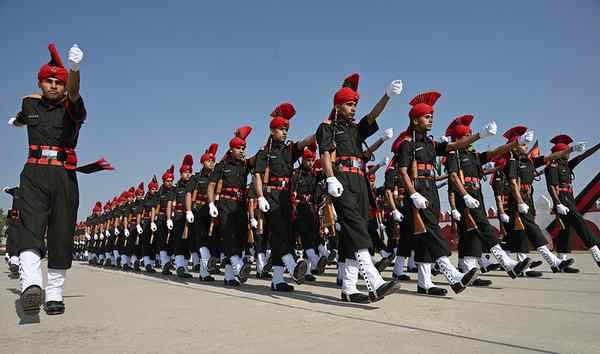
Army to Prepare Ex-Agniveer List for CAPF Postings
The government would ensure that 50% of vacancies of CAPF Constables (GD) would be reserved for ex-Agniveers who qualify for the same. Lists of candidates would be provided by the Army, Navy, and Air Force for recruitment in CAPFs. Relaxations would be offered to ex-Agniveers for recruitment purposes, improving the chances of employment after retirement.
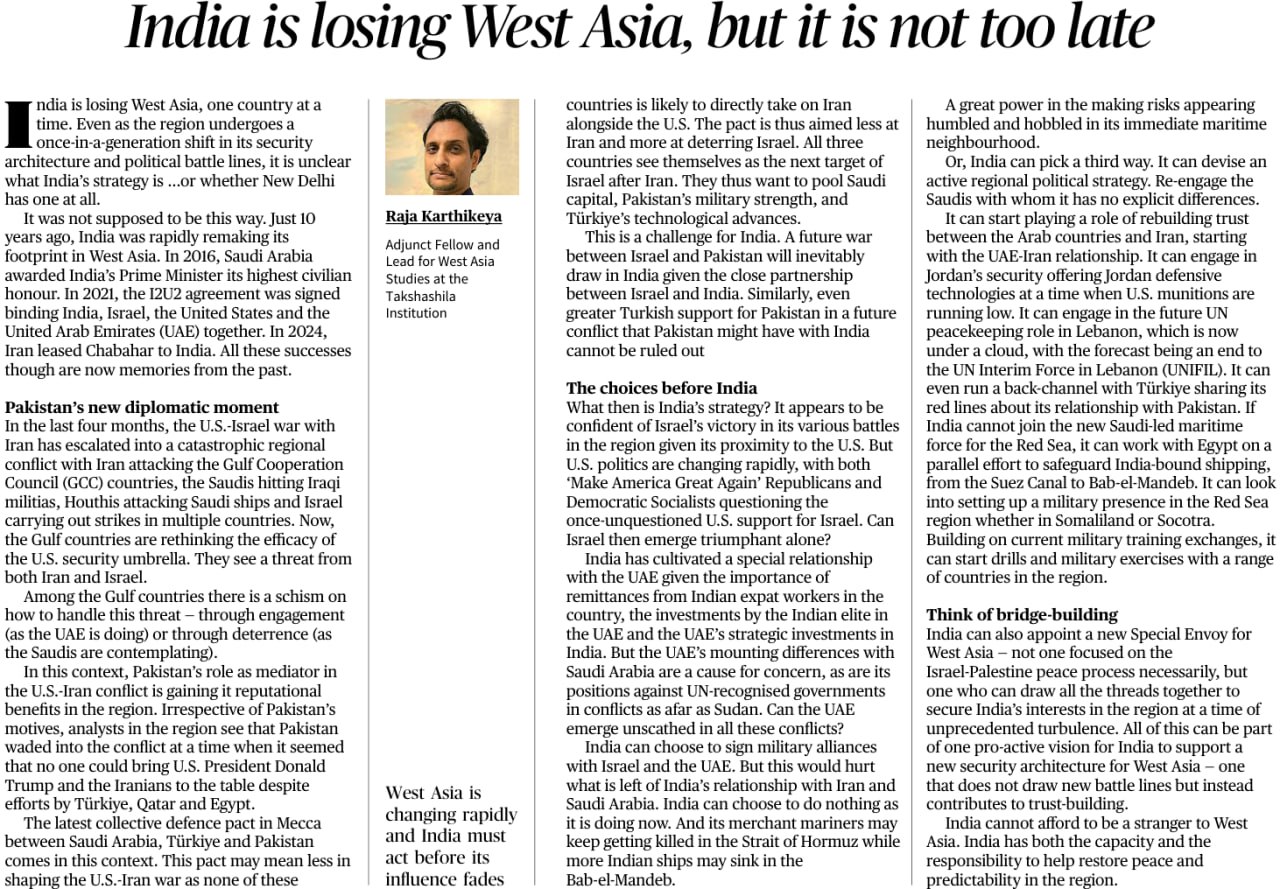
India is losing West Asia, but it is not too late
India is in the middle of an evolving security environment of West Asia, which is fraught with problems concerning Iran, Israel, and the Gulf countries and Pakistan. As West Asia is an area of utmost importance due to its energy resources, trade, diaspora, and maritime interests of India, the country needs to adopt proactive multi-alignment and strategic autonomy and build stronger maritime security.

Europe’s AI rules may become India’s opportunity
The Government of India has been looking into separate legislation on Artificial Intelligence (AI). On the other hand, the EU’s AI Act, which came into effect from August 2024 and became applicable from August 2, 2026, is all set to shape the global AI value chain. The Act adopts a risk-based approach whereby certain AI systems have been prohibited, high-risk AI systems have been regulated, and lighter scrutiny has been provided for limited-risk uses. Though Indian companies understand that the Act will be applicable in every situation when the result of their AI system is produced in Europe, the more relevant story lies beyond the compliance aspect. This article discusses how the EU’s AI Act can create new possibilities for India’s tech and professional services sector. It focuses on the challenges in compliance created by the risk-based approach in the AI Act, especially for customised and adaptive IT services in India, while discussing possibilities in AI compliance, conformity assessment, and service exports.
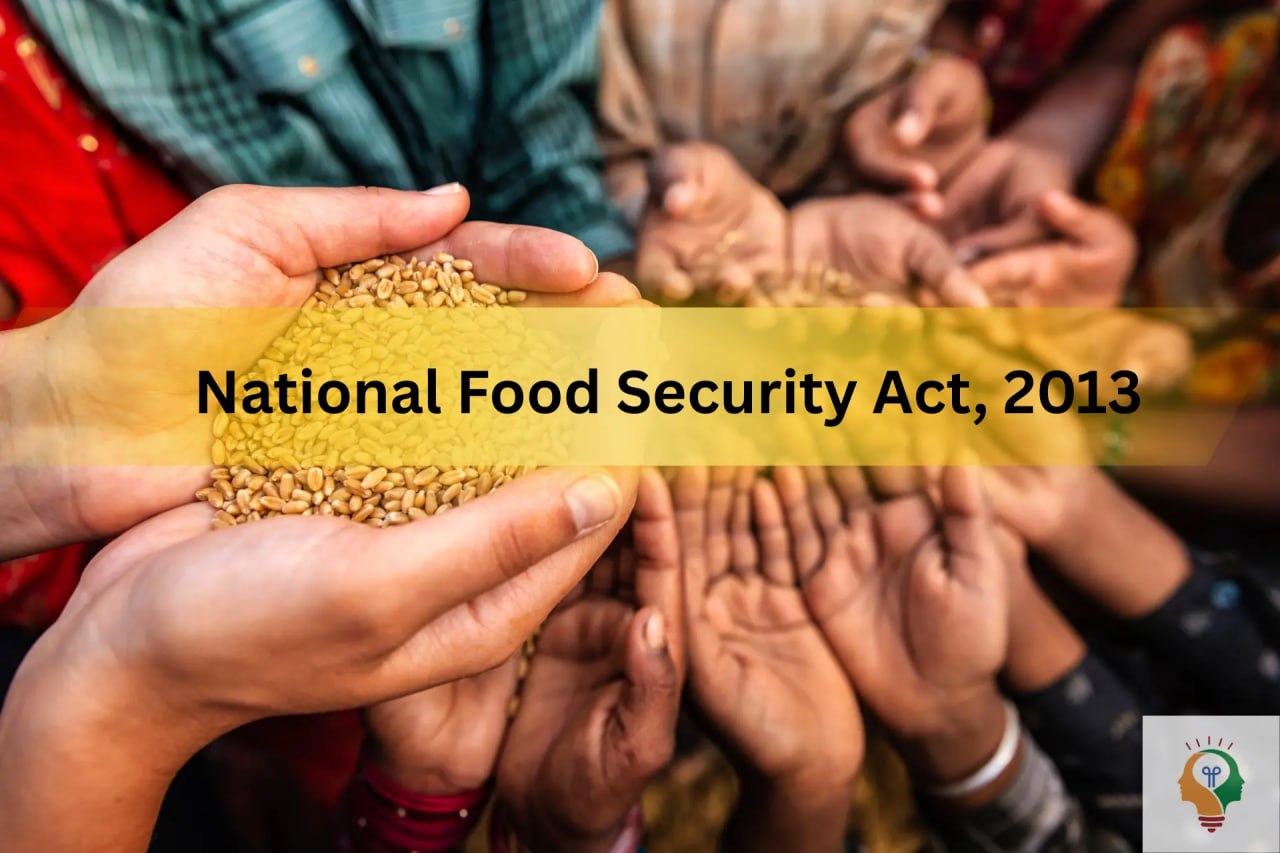
A Timely Reset for the Food Security Act: Explained
The food security strategy of India should move beyond grain security towards achieving nutrition security. The AAY scheme amendment of 7 kg per head, up to a maximum of 35 kg, could be detrimental for smaller households. Reforms should ensure that there is no loss, an NFSA beneficiaries’ list update based on Census 2027, and diversification of the PDS basket.

Retail inflation hits 19-month high of 4.45% in July 2026 as food, fuel prices rise
The inflation rate in India touched a 19-month high of 4.45% in July 2026 because of the increase in food prices, particularly that of vegetables, while the core inflation rate remained steady at 3.9%. The RBI can accommodate this situation, but certain dangers need joint efforts by monetary and supply-side policies.
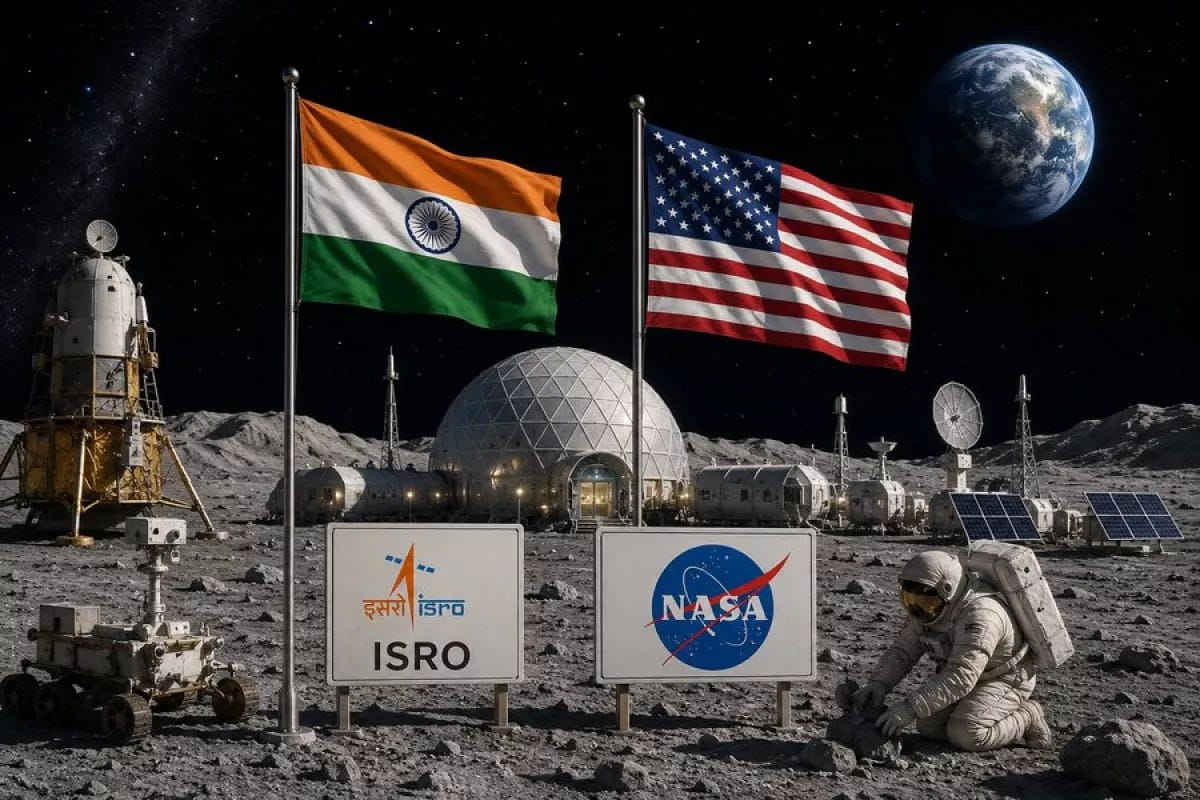
NASA Invites ISRO to Join Mission for Lunar Outpost
The NASA lunar base project near the South Pole of the Moon included ISRO, and this has led to increased cooperation between India and the US in the space sector. This project could help India in human space exploration, lunar technologies, science, and space diplomacy. But it is accompanied by several problems, including cost, environmental conditions, and resource management.
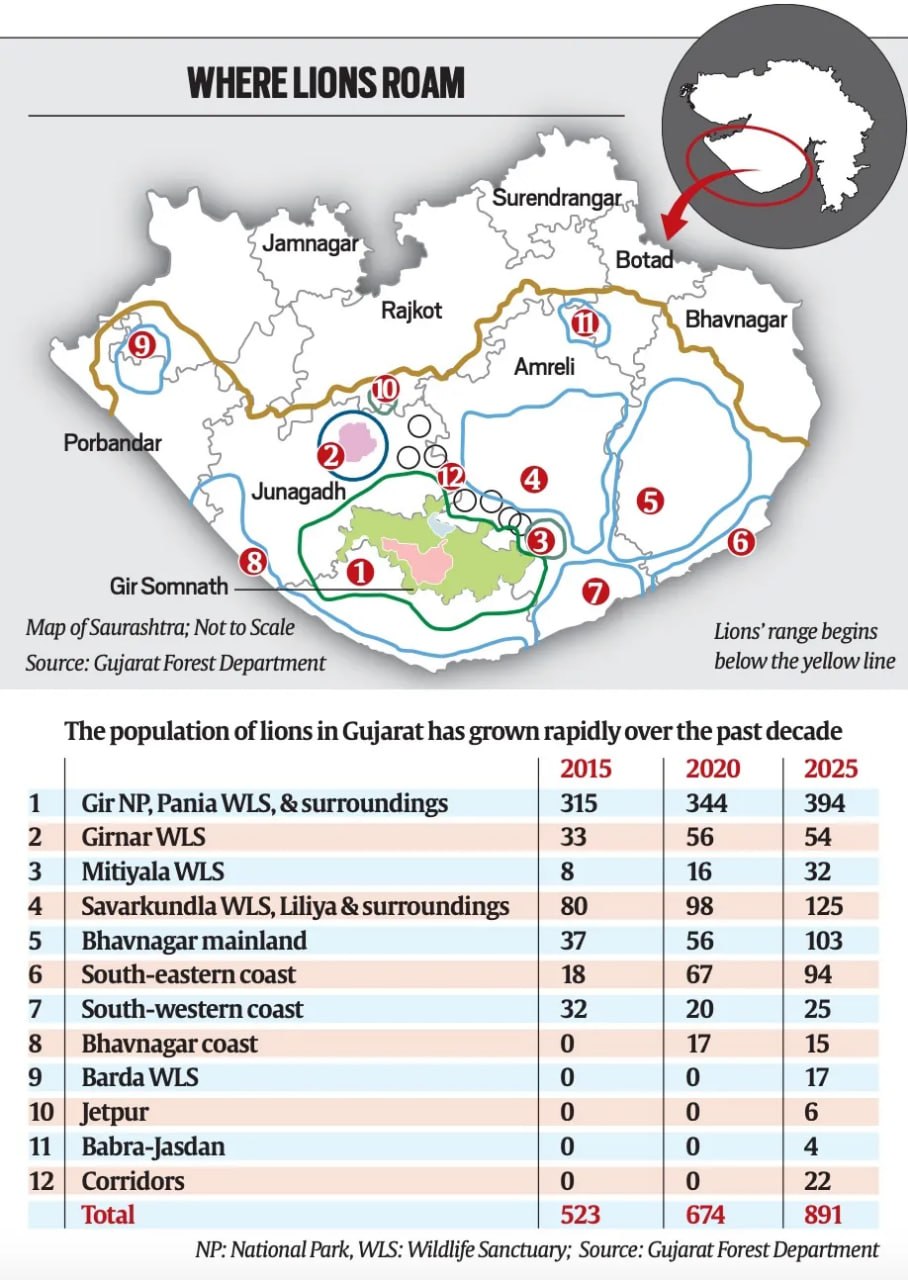
Asiatic Lion population rises from 523 in 2015 to 891 in 2025
The Asiatic lion population in India increased from 523 in 2015 to 891 in 2025, as conservation efforts under Project Lion (2020) were successful. Nonetheless, keeping all the wild Asiatic lions in one area, the Gir landscape, poses several threats to the species from diseases, habitat saturation, human-wildlife conflicts, and catastrophes.
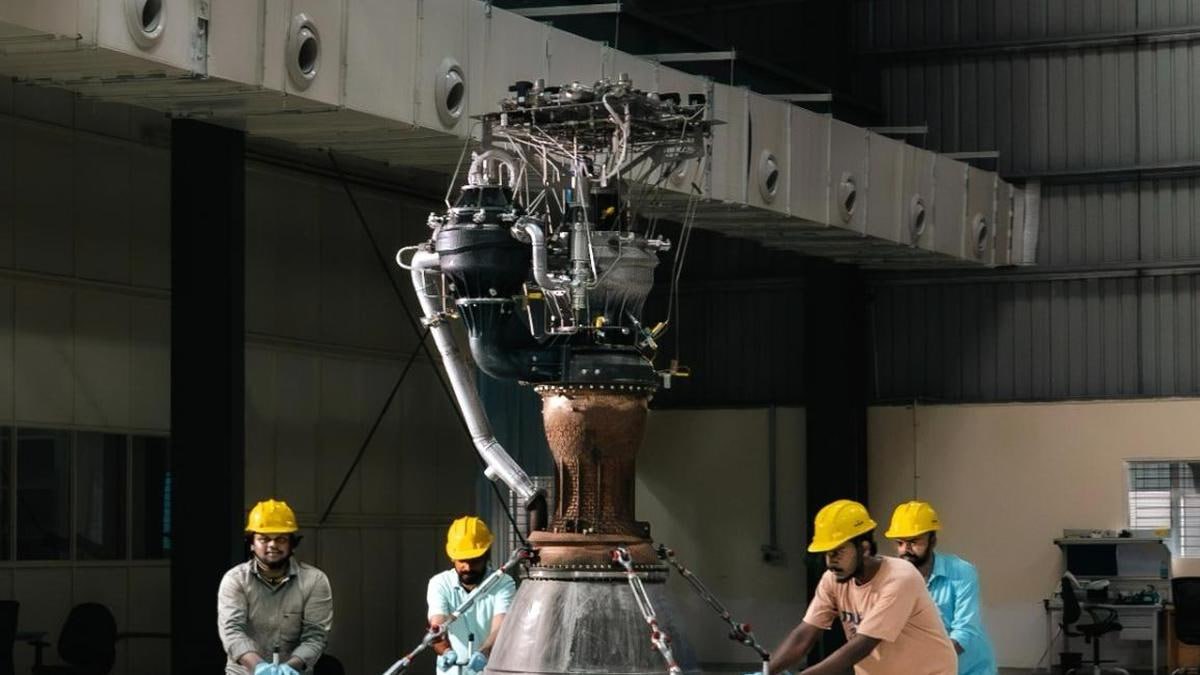
India’s First Privately-Built FFSC Rocket Engine Signals New Dawn
India’s first-ever private EVEREST FFSC LOX-methane engine is a big step forward for the Indian private sector in space propulsion. The engine provides high efficiency and reusability due to its 800 kN thrust. This new development of India, with help from IN-SPACe and the India Space Policy 2023, can be useful in increasing indigenous propulsion, heavy lift, and reusability capability.
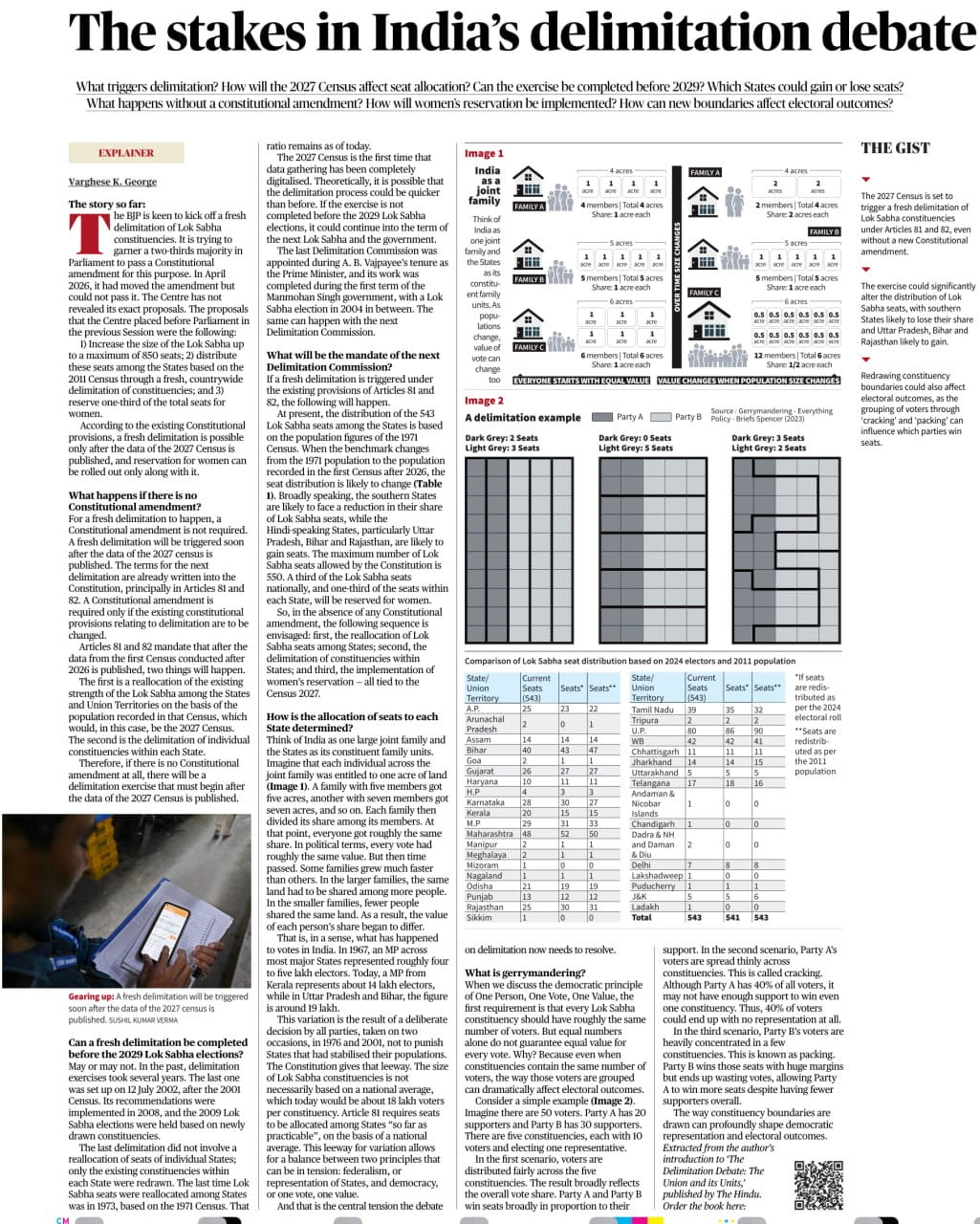
The Stakes in India’s Delimitation Debate Explained
The post-2027 Census delimitation process will likely lead to the redistricting of seats in the Lok Sabha on the basis of population growth, giving rise to an advantage for the high population growth states at the expense of the population stabilizing southern states. The issue revolves around federalism, ‘one person one vote’, population stabilization, reservation for women, and fairness in elections.
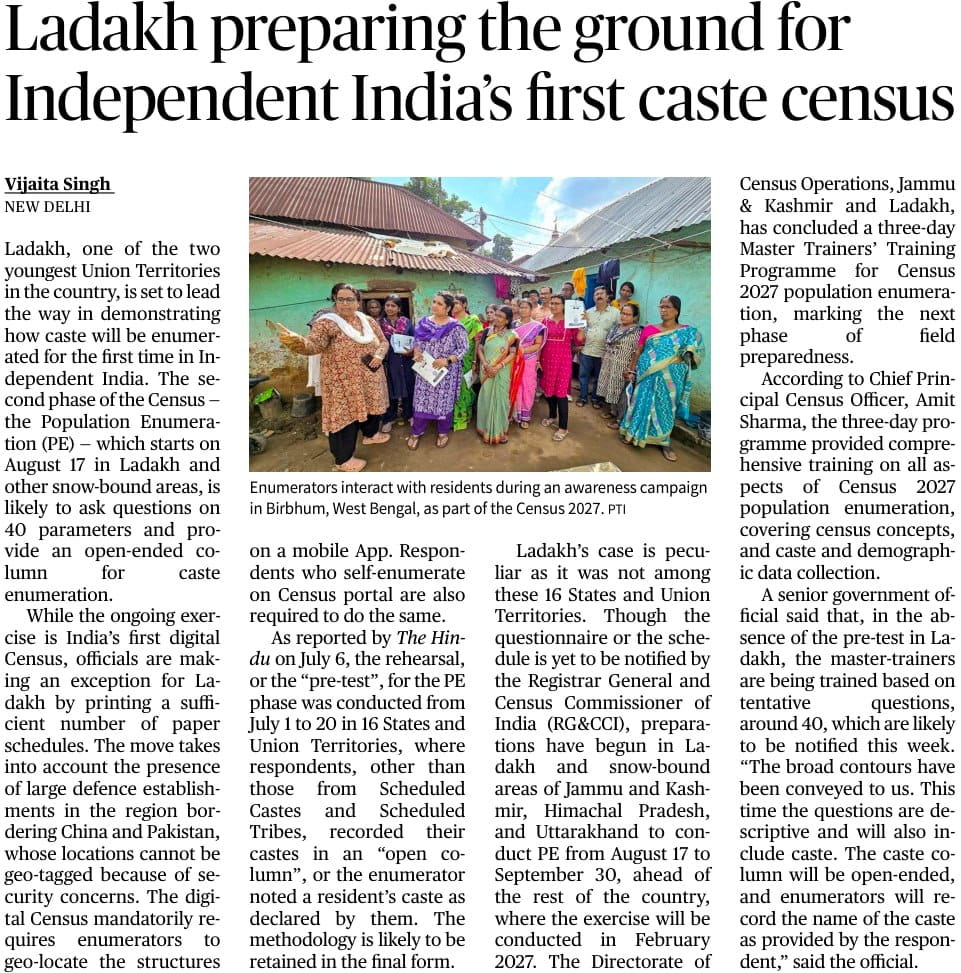
Ladakh to Lead Independent India’s First Caste Enumeration
The Census 2027 will have the enumeration of castes in India, with Ladakh taking the lead in Population Enumeration since August 17. There will be an open-ended column for caste enumeration that will allow self-declaration. This process can help in formulating more effective policies regarding reservation and welfare, although many problems may arise.

India Names 27 Places in Arunachal Pradesh on Official Map
The official nomenclature of 27 places in Arunachal Pradesh by India strengthens its sovereignty and negates the attempts by China to rename them. The step reflects the significance of map-making in international politics. It also emphasises the significance of good maps, border infrastructure, strategic preparation, diplomacy, and efforts for an acceptable India-China border settlement.

Food Security Act Amendment May Hurt the Poorest: Explained
The NFSA amendment would change the entitlement of AAY from 35 kg per household to about 7 kg per individual, impacting smaller and weaker households more adversely. Since entitlement based on a per-capita approach would ensure formal equality, it could undermine substantive equality. Thus, reforms in this regard must consider both aspects.

Lok Sabha Passes Bill Allowing Banks to Levy Charges on UPI
The Taxation and Other Laws (Amendment) Bill 2026 would help the government tweak the zero-MDR regime applicable on the Unified Payments Interface (UPI) and RuPay without having to introduce charges immediately. The move is an attempt to bring more flexibility into the system in light of India-US trade worries.

Hero Stone Found in Karnataka Sheds Light on Last Hoysala Ruler
A Veeragallu found in Neeragunda, Karnataka, has a Kannada inscription that has been dated to December 11, 1141 CE. The inscription talks about the death of a soldier after the death of Hoysala king Vishnuvardhana at Bankapura. The inscription can be used to end some controversies about the death year of Vishnuvardhana.

Why Floods in Kerala Are Becoming More Severe
Floods in Kerala are becoming increasingly intense as a result of the monsoonal rains and human actions like wetland destruction, siltation of rivers, siltation of dams, and urbanization. It is crucial that steps like wetland restoration, desiltation of rivers, regulation of land use, development of climate-proof infrastructure, and river basin management are undertaken to prevent floods.

Glaw Lake Becomes Arunachal Pradesh’s First Ramsar Site
Glaw Lake is the first Ramsar Site in Arunachal Pradesh. Glaw Lake is internationally recognised for its ecological significance due to its location in the Eastern Himalayas. It has high biological diversity and is vital in water conservation and adaptation to climate change. This classification encourages scientific management, public involvement, and ecotourism.

Parliament Clears Bill to Strengthen Birth and Death Registration
The Registration of Births and Deaths (Amendment) Bill, 2026 will help improve the Civil Registration System of India by making it mandatory that a JMFC order is needed to register births or deaths that have been reported more than two years after the event. This bill will ensure that there are no fraudulent entries in the system.

Taxation and Other Laws (Amendment) Bill, 2026 Introduced in Lok Sabha
The Taxation and Other Laws (Amendment) Bill, 2026 is an effort towards bringing a contemporary Indian taxation system which can help improve tax certainty, bring in foreign investments, improve digital payment systems and infrastructure and restore tax benefits on REITs and InvITs, besides substituting the Income-tax (Amendment) Ordinance, 2026.

New Real-Time Portal for Organ Transplants Launched
The NOTTO Real-Time Organ Transplantation portal brings forth a consolidated national wait list, facilitates real-time organ distribution, helps to facilitate national donation swaps, and enhances the transparency and effectiveness of transplantations. The tool promotes Digital Health governance but needs higher organ donor rates, participation of states on an equal footing, advanced hospital infrastructure, and public education to succeed.

Rajya Sabha Passes MSME Development (Amendment) Bill, 2026
The MSME Development (Amendment) Bill, 2026 encourages digitisation and invoice financing through TReDS, as part of an effort to enhance MSME liquidity and formalisation. It aims to facilitate quick payments and develop the digital economy. It will be successful based on the following factors: greater use of TReDS, implementation, digital literacy, and financial inclusion of MSMEs.

Drugs-Free Youth Crucial for Developed India: PM Modi
Nasha Mukt Yuva for Viksit Bharat Sankalp Abhiyan is a nation-wide initiative which lasts for 100 weeks to make a drug-free young generation by adopting methods like creating awareness, preventing youth from drugs and rehabilitating people from trafficking. Through community participation and adopting a healthy lifestyle, it intends to capitalise on India’s demographic dividend.

Why Are Government Schools Shutting Down in India?
According to a report by NITI Aayog, there have been around 94,000 school closures or mergers during the last decade due to school rationalisation. Although the process is geared towards optimising resources as per NEP 2020, questions arise regarding accessibility problems, greater chances of dropouts, and violations of the neighbourhood provision of the RTE Act.