EditorialGS3medium

Europe’s AI rules may become India’s opportunity

The Government of India has been looking into separate legislation on Artificial Intelligence (AI). On the other hand, the EU’s AI Act, which came into effect from August 2024 and became applicable from August 2, 2026, is all set to shape the global AI value chain. The Act adopts a risk-based approach whereby certain AI systems have been prohibited, high-risk AI systems have been regulated, and lighter scrutiny has been provided for limited-risk uses. Though Indian companies understand that the Act will be applicable in every situation when the result of their AI system is produced in Europe, the more relevant story lies beyond the compliance aspect. This article discusses how the EU’s AI Act can create new possibilities for India’s tech and professional services sector. It focuses on the challenges in compliance created by the risk-based approach in the AI Act, especially for customised and adaptive IT services in India, while discussing possibilities in AI compliance, conformity assessment, and service exports.

14 Aug 2026 4 min read 1 views
Europe’s AI rules may become India’s opportunity

Quick Revision

Why in news: The European Union’s AI Act has started enforcing a comprehensive, risk-based regulatory framework for Artificial Intelligence. The recent amendment has also delayed some compliance timelines for high-risk AI systems. It has serious ramifications for Indian Information Technology companies, global capability centres (GCCs), and technology-service providers developing, modifying, and deploying AI systems for the European market. On the other hand, India is contemplating the introduction of a separate AI Act, which will provide scope for building an AI-compliance ecosystem for both the domestic and international markets.

Background

The EU AI Act follows a risk-based approach:

  • Unacceptable-risk AI: Certain AI applications are prohibited.

  • High-risk AI: Subject to stringent requirements relating to testing, documentation, human oversight and conformity assessment.

  • Limited/minimal-risk AI: Lighter transparency and compliance obligations.

A key issue for Indian firms is “substantial modification.” 

  • If a high-risk AI system is significantly modified after its initial conformity assessment, a fresh assessment may be required.

  • This is particularly relevant to India because its IT industry is strongly based on customisation, continuous upgrades and client-specific solutions, rather than only selling fixed software products.

Precautionary Principle:

  • Case: Vellore Citizens’ Welfare Forum vs Union of India.

  • The Supreme Court held that the State must anticipate, prevent and attack environmental degradation. Preventive action should precede scientific certainty regarding environmental harm.

  • According to experts, the precautionary principle is superior to the polluter pays principle, since prevention is more effective than post-damage compensation.

Sustainable Development:

  • The Court recognised environmental protection and economic development are complementary rather than contradictory.

  • Precautionary Principle and Polluter Pays Principle are essential components of sustainable development, now recognised as part of customary international law.

Public Trust Doctrine:

  • Case: M.C. Mehta vs Kamal Nath (Span Motel Case).

  • Natural resources are held by the State in trust for the public. Governments cannot permit their misuse for private interests.

Features 

  • AI compliance services

The EU framework requires extensive:

  • Technical documentation

  • Testing and validation

  • Risk-management systems

  • Human oversight

  • Governance and record-keeping

Indian legal, technical and consulting firms can develop specialised AI compliance and assurance services.

Judicial Inconsistency in Environmental Cases

  • While the Supreme Court has historically strengthened environmental protection, concerns have emerged regarding inconsistency.

  • According to Justice Gautam Patel:

  • Courts have generally supported environmental causes raised by non-governmental organisations (NGOs).

  • However, judicial scrutiny has often been less rigorous in cases involving large infrastructure and development projects.

  • This creates a contradiction between the Court’s stated environmental principles and their practical application.

  • Such inconsistency weakens environmental governance and public confidence.

Opportunity for IT services industry

  • Indian IT companies and GCCs can turn their experience in software testing, cybersecurity, data protection and regulatory compliance into AI governance capabilities.

Conformity assessment ecosystem

  • The EU framework creates possibilities for qualified conformity-assessment bodies in third countries to gain recognition under appropriate international arrangements.

India-EU trade relationship

  • The India-EU trade agreement provides mechanisms for regulatory cooperation. 

  • India could use this institutional framework to negotiate arrangements that allow qualified Indian bodies to participate in the European AI conformity-assessment ecosystem.

Challenges

Substantial modification problem

  • Indian firms frequently modify AI solutions according to client requirements. An unanticipated modification could potentially trigger a new conformity-assessment process.

Compliance costs

  • Extensive documentation, testing and governance can increase costs, particularly for smaller Indian companies.

Regulatory uncertainty

  • Technical standards and detailed compliance requirements are evolving, making it difficult for companies to design long-term compliance strategies.

Risk of reduced innovation

  • Excessive regulatory burdens could discourage experimentation and rapid deployment of AI solutions.

International recognition 

  • For Indian conformity-assessment bodies to participate formally in the EU ecosystem, appropriate recognition and institutional arrangements with the EU would be necessary.

Way Forward

  • Build an Indian AI assurance industry: Develop specialised firms for AI auditing, testing, certification and compliance.

  • Strengthen India-EU regulatory cooperation: Use the trade agreement to pursue mutual recognition and institutional cooperation in AI standards.

  • Develop global AI standards expertise: Indian institutions should participate actively in international standard-setting.

  • Create predictable domestic regulation: India’s proposed AI framework should balance innovation with safety, transparency and accountability.

  • Upskill professionals: Train lawyers, engineers, auditors and policymakers in AI governance and regulatory technology.

  • Support MSMEs and startups: Provide standardised compliance frameworks and affordable testing facilities to prevent regulation from becoming a barrier to entry.

Conclusion

EU AI Act might be seen as an issue of compliance for Indian tech firms at first sight; however, it can be converted into a substantial business opportunity. India has a massive workforce of technology professionals, a well-developed IT services sector and good knowledge of regulatory and technical services. With the help of that, by adding to it India-EU regulatory collaboration, India can not only comply with European AI legislation, but also export its compliance, assurance and certification services. Hence, the new AI regulation can convert “rules India fears” into “services India sells.”

UPSC Prelims Facts

Term: EU Artificial Intelligence Act (EU AI Act)

Meaning: A comprehensive EU law regulating Artificial Intelligence through a risk-based approach, under which AI systems are classified according to the level of risk they pose and subjected to proportionate requirements such as prohibition, transparency, testing, documentation, human oversight and conformity assessment.

Related: Risk-Based AI Regulation, Unacceptable-Risk AI, High-Risk AI Systems, Limited/Minimal-Risk AI, Substantial Modification, Conformity Assessment, AI Auditing, AI Assurance, AI Governance, Technical Documentation, Human Oversight, Risk Management, AI Standards, India–EU Regulatory Cooperation, Global Capability Centres (GCCs), AI Compliance Services, Regulatory Technology, IT Services, AI Act

Core Themes: AI Regulation; Risk-Based Approach; AI Safety; High-Risk AI; AI Compliance; Conformity Assessment; AI Auditing; AI Assurance; Human Oversight; Transparency; Technical Documentation; Risk Management; India–EU Cooperation; IT Services; AI Governance; Regulatory Technology; AI Standards; Service Exports; Innovation vs Regulation; MSME Compliance; Digital Economy; Professional Services; Global AI Value Chain

Prelims angle

Focus on key facts, terms and institutions mentioned above.

Mains angle

Link to relevant GS themes and frame analytical points.

Syllabus: Science & Technology, Science, Technology

Download notes

Daily Current Affairs - 14 August 2026

Free download

Test yourself

Daily Current Affairs Quiz - 14 August 2026

Practice the related MCQs now.

Attempt the quiz
Free resource

Get free monthly Current Affairs PDF

Join thousands of aspirants. We'll send the compilation to your WhatsApp.

No spam. Unsubscribe anytime.

More from Current Affairs

NASA Invites ISRO to Join Mission for Lunar Outpost
Daily Important
Science & TechPrelims + Mains

NASA Invites ISRO to Join Mission for Lunar Outpost

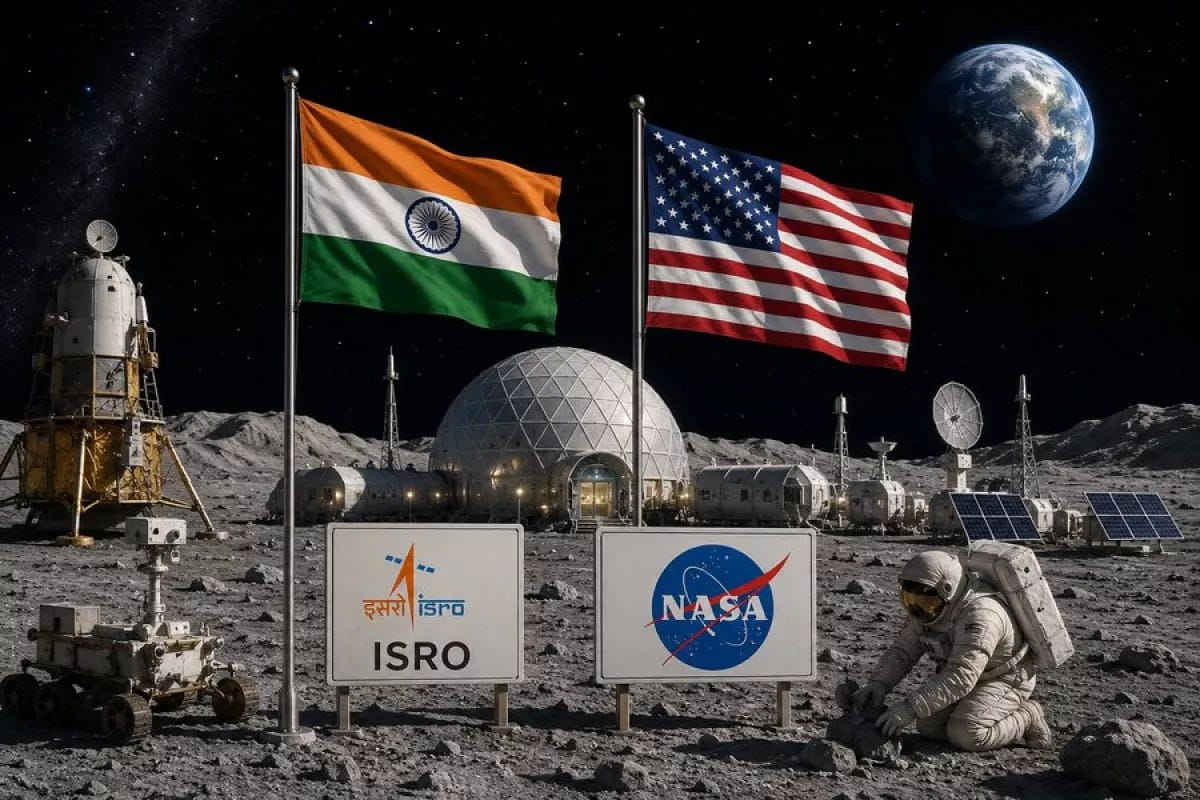
The NASA lunar base project near the South Pole of the Moon included ISRO, and this has led to increased cooperation between India and the US in the space sector. This project could help India in human space exploration, lunar technologies, science, and space diplomacy. But it is accompanied by several problems, including cost, environmental conditions, and resource management.

12 Aug 2026 4 min
India’s First Privately-Built FFSC Rocket Engine Signals New Dawn
Daily Important
Science & TechPrelims + Mains

India’s First Privately-Built FFSC Rocket Engine Signals New Dawn

India’s first-ever private EVEREST FFSC LOX-methane engine is a big step forward for the Indian private sector in space propulsion. The engine provides high efficiency and reusability due to its 800 kN thrust. This new development of India, with help from IN-SPACe and the India Space Policy 2023, can be useful in increasing indigenous propulsion, heavy lift, and reusability capability.

11 Aug 2026 3 min
New Real-Time Portal for Organ Transplants Launched
Daily Important
Science & TechPrelims + Mains

New Real-Time Portal for Organ Transplants Launched

The NOTTO Real-Time Organ Transplantation portal brings forth a consolidated national wait list, facilitates real-time organ distribution, helps to facilitate national donation swaps, and enhances the transparency and effectiveness of transplantations. The tool promotes Digital Health governance but needs higher organ donor rates, participation of states on an equal footing, advanced hospital infrastructure, and public education to succeed.

4 Aug 2026 3 min