Topic
Economy
Latest UPSC current affairs on Economy for Prelims and Mains.
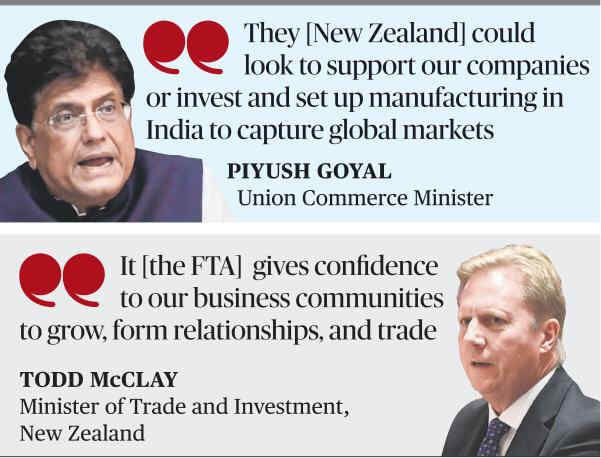
India-New Zealand FTA to Take Effect on October 20
India-NZ FTA, which is valid from October 20, is aimed at increasing bilateral trade twofold to reach ₹35,000 crore in 4-5 years. New Zealand offers duty-free access for products made in India, whereas India safeguards its sensitive industries such as dairy and agriculture.
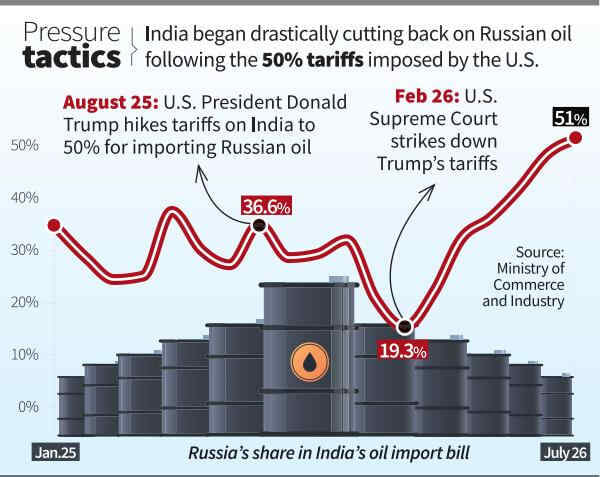
Indian Oil Imports Fall After U.S. Curbs, Data Show
The imports of oil by India from nations subject to sanctions have seen fluctuations due to U.S. influence; Venezuela and Iran fell to zero after sanctions. In July 2026, Russian imports stood above 51% after U.S. tariffs were ruled unconstitutional.
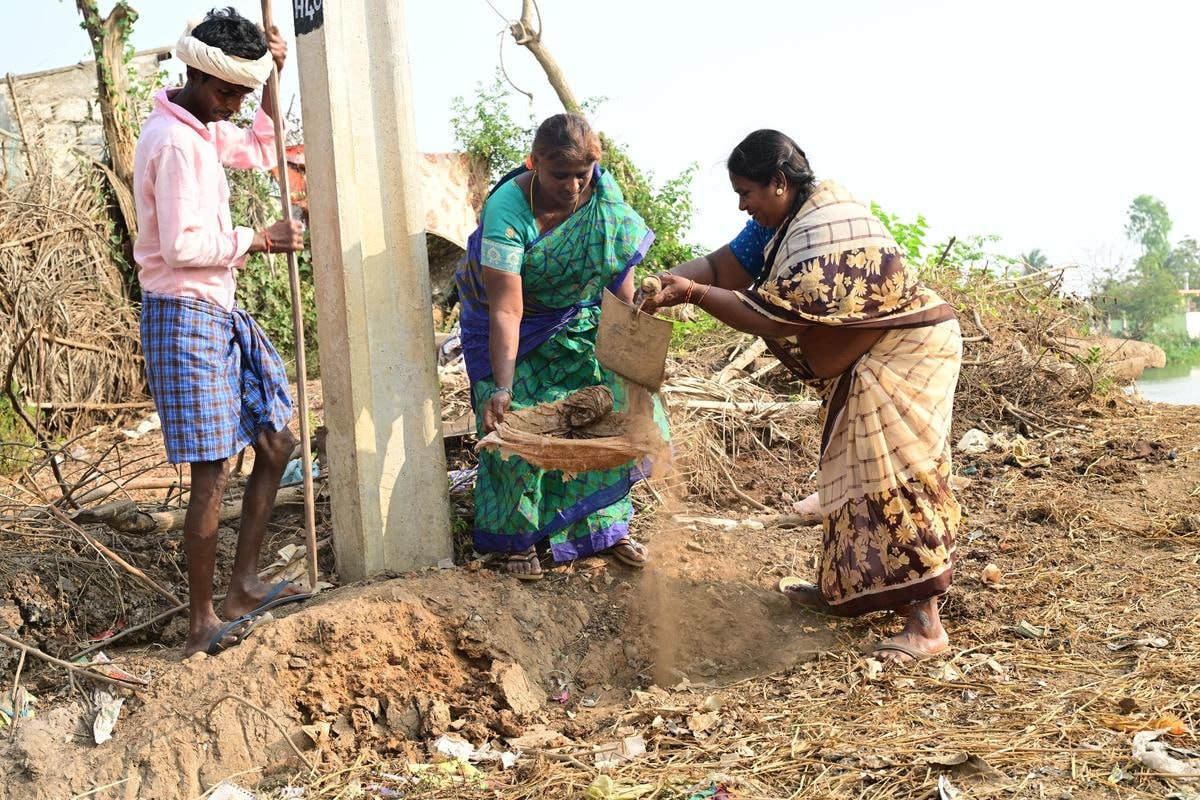
VB-G RAM G Scheme Trails MGNREGS by 9% in August
The employment rate for VB-G RAM G decreased by 9.01% in August 2026 compared to August 2025, and the person-days between July and August decreased by 32.13% in comparison to MGNREGS 2025. The project has agricultural planning with a 60-day window break from farming activities, and the government states that it is too short to decide.
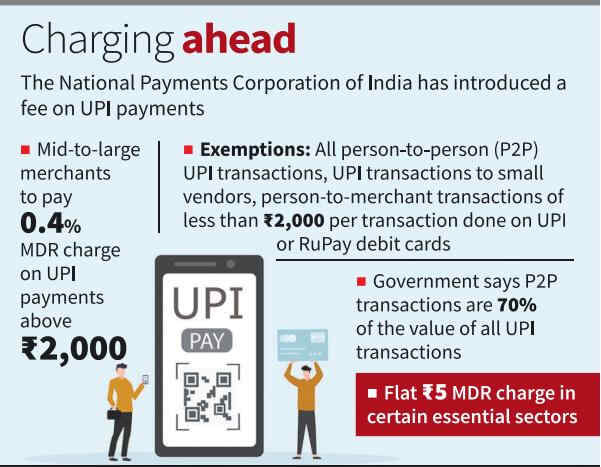
0.4% UPI Fee on Merchant Payments Above ₹2,000
NPCI will charge a 0.4% MDR for UPI merchant transactions above ₹2,000 from 15 October, but peer-to-peer transactions and transactions below ₹2,000 will continue to be free of cost. The architecture is designed to achieve equilibrium between making UPI affordable and ensuring its sustainability. Cost-passing, merchant adoption, and rural penetration are among the challenges.
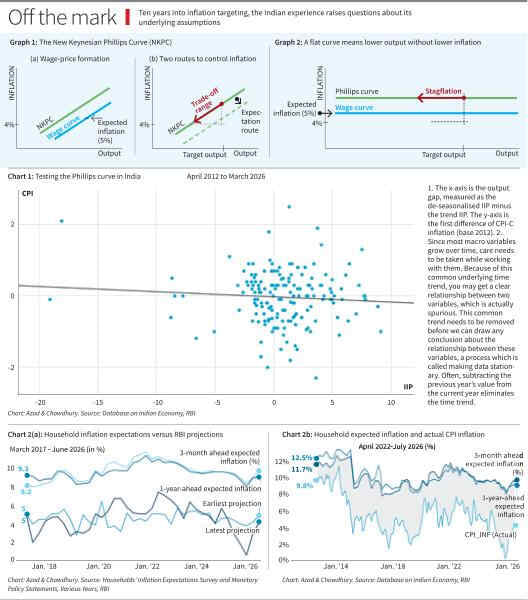
Does Inflation Targeting Work in India? Explained
Inflation Targeting, which is a decade-old framework for India (4% CPI), is facing difficulties due to a flat Phillips curve, unanchored expectations, and supply shocks. Rate increases could negatively impact growth without reducing inflation. Future actions should include monetary policies and supply-side measures, better communication, fiscal coordination, and India-specific models.
GST Revenue Grows 14.8% to Nearly ₹2 Lakh Crore in August
GST collections reached ₹1.998 lakh crore, growing by 14.8%. However, several concerns remain: domestic growth at 9.3% is lower than import growth of 29%, while refunds have increased by 72.6%. The inverted structure of the GST duties is still a concern. Moving ahead, rate rationalisation and compliance are needed.
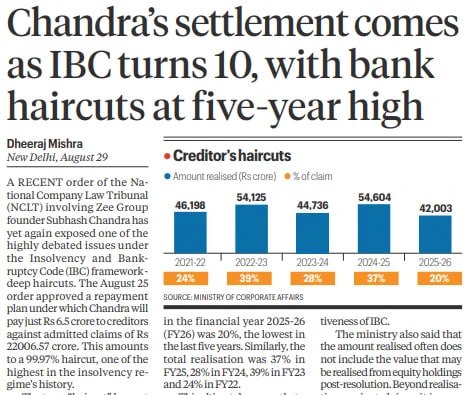
Chandra’s settlement comes as IBC turns 10, with bank haircuts at five-year high
The bankruptcy proposal put forth by Subhash Chandra with a haircut of 99.97% has once again opened the debate on IBC. It throws light on many of the issues relating to resolution versus recovery, related-party voting, and personal guarantors.
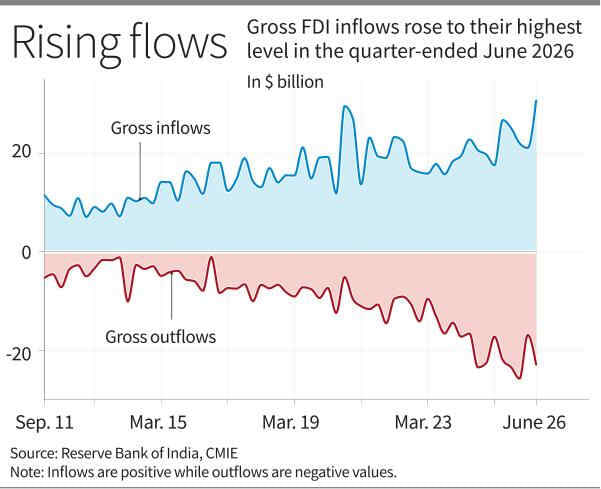
Gross FDI hit 15-year high of $30.7 billion in April-June 2026
Gross FDI inflow into India registered a 15-year record of $30.7 billion in Q1 2026, showing an increase of 46% from the previous quarter, led by the manufacturing sector. Net FDI inflow has become positive with $1.3 billion recorded in June. Challenges are posed by large outflows, concentration of investors, and the requirement for good-quality investments.

India Can Become Global Shipbuilding Hub: Rajnath Singh
India can emerge as a global shipbuilding centre owing to the decline in conventional centres, strategic autonomy, strong steel infrastructure, skilled labour force, and export prospects. Issues faced include global competition, capacity constraints, and financing. The approach needed includes clusters, PPPs, R&D, policy initiatives, and skill development, moving from import dependence to global exports.
Retail inflation hits 19-month high of 4.45% in July 2026 as food, fuel prices rise
The inflation rate in India touched a 19-month high of 4.45% in July 2026 because of the increase in food prices, particularly that of vegetables, while the core inflation rate remained steady at 3.9%. The RBI can accommodate this situation, but certain dangers need joint efforts by monetary and supply-side policies.

Lok Sabha Passes Bill Allowing Banks to Levy Charges on UPI
The Taxation and Other Laws (Amendment) Bill 2026 would help the government tweak the zero-MDR regime applicable on the Unified Payments Interface (UPI) and RuPay without having to introduce charges immediately. The move is an attempt to bring more flexibility into the system in light of India-US trade worries.

Taxation and Other Laws (Amendment) Bill, 2026 Introduced in Lok Sabha
The Taxation and Other Laws (Amendment) Bill, 2026 is an effort towards bringing a contemporary Indian taxation system which can help improve tax certainty, bring in foreign investments, improve digital payment systems and infrastructure and restore tax benefits on REITs and InvITs, besides substituting the Income-tax (Amendment) Ordinance, 2026.

Rajya Sabha Passes MSME Development (Amendment) Bill, 2026
The MSME Development (Amendment) Bill, 2026 encourages digitisation and invoice financing through TReDS, as part of an effort to enhance MSME liquidity and formalisation. It aims to facilitate quick payments and develop the digital economy. It will be successful based on the following factors: greater use of TReDS, implementation, digital literacy, and financial inclusion of MSMEs.

Industrial growth hits 23-month high of 7.3%
Industrial production in India increased by 7.3% in June 2026, marking the highest growth rate since August 2024. It is necessary to maintain this trend while managing the concerns surrounding the monsoon, inflation, geopolitics, and logistics.

The Rupee is No Longer Overvalued
The rupee is undervalued, making India competitive in exports and manufacturing. Yet, import prices, inflation, and other risks pose difficulties. This calls for a stable currency exchange rate, increased exports, and structural reform.

India’s Total Exports Reach Record $863.1 Billion in 2025-26
India recorded an all-time high of US$863.1 billion for its exports in fiscal year 2025-26, owing to its robust performance in merchandise exports, service exports, FTAs, and digital trade facilitation. Even when faced with obstacles such as global slowdown, protectionism, and logistics costs, India will continue to grow through exports owing to its FTAs, manufacturing, infrastructure, and MSMEs.

Fiscal Health Index (FHI) 2026
Fiscal Health Index (FHI) 2026 of NITI Aayog is a rating tool for evaluating the fiscal performance of 28 States for FY 2023-24 based on four criteria – quality of expenditure, revenue generation, fiscal prudence, and debt management. It helps to promote fiscal responsibility, sustainability of public finance, transparency, and cooperative federalism.
RBI Monetary Policy 2026: Repo Rate Held at 5.25%
The RBI's Monetary Policy Committee held the repo rate at 5.25% with a unanimous 6-0 vote in June 2026 and retained the neutral stance. FY27 CPI inflation is projected at 5.1% and GDP growth at 6.6%. Complete UPSC analysis of the framework, transmission, the West Asia oil shock and the monsoon risk.
Section 301 Forced Labour Tariffs: India Gets 10%
The US has imposed a 10% Section 301 tariff on Indian goods from 24 July 2026 under a forced-labour action covering 60 economies. India escaped the 12.5% slab after amending its Foreign Trade Policy. Complete UPSC analysis of the legal basis, WTO implications and India's response.

NITI Aayog Releases Investment Friendliness Index Report
The Investment Friendliness Index (IFI) by NITI Aayog is an index that measures the states and UTs on their investment-friendliness with 84 parameters across eight domains. It includes 28 states and 8 UTs and serves the purpose of promoting competitive and cooperative federalism, bringing about reforms, improving investment, and implementing the vision of Viksit Bharat @2047.

Why inflation is rising in India? Causes & Impact Explained
In India, the WPI inflation rate has shot up to 9.87% in June 2026 due to factors including a rise in prices of fuels, manufacturing costs, and a weak monsoon causing food inflation. This particular event has brought out the importance of implementing supply-side measures, climate-friendly farming techniques, fuel taxation policy, energy security, and macroeconomic measures.

India's F&O Boom Needs Adequate Protections
The futures and options market in India has shown remarkable growth to become one of the biggest derivative markets in the world. But with increasing participation from retail customers, especially new and inexperienced traders, there have been considerable financial losses, indebtedness, and suicide cases reported.

Revised Index of Core Industries (ICI) Series (Base Year 2022–23)
The Index of Core Industries (ICI) based on the base year 2022-23 will be rolled out by the Office of Economic Adviser (DPIIT) on July 20, 2026, in place of the 2011-12 series. The Index of Core Industries will include Iron Ore as the ninth core industry through this revision.

Retail Inflation Climbs Past RBI Target to 4.4%
The retail inflation in India for June 2026 increased to 4.4%, which is above the 4% target of the Reserve Bank of India, owing to elevated food and fuel prices along with erratic rainfall and geopolitical unrest in West Asia. Although the rate of inflation remains in the 2–6% range, coordination between fiscal and monetary policies is crucial.
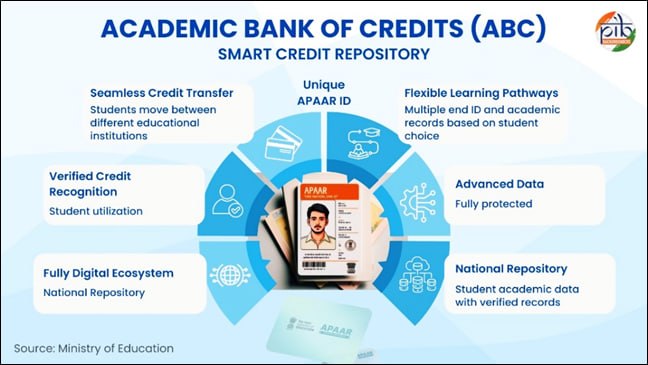
Academic Bank of Credits (ABC) & APAAR
The Academic Bank of Credits (ABC) is a UGC-regulated digital repository that enables students to store, transfer, and redeem academic credits across recognised institutions. APAAR provides a lifelong 12-digit digital student ID linked to Aadhaar, DigiLocker, and ABC. Introduced under NEP 2020, these reforms promote flexible learning, student mobility, secure digital records, and seamless credit recognition while supporting lifelong education.
Index of Services Production (ISP)
The Index of Services Production (ISP), which is set to be launched in July 2026, is the first monthly indicator in India that measures the production in the formal services sector. ISP is an addition to the existing index, IIP, but excludes informal sector services and some government services.