Background
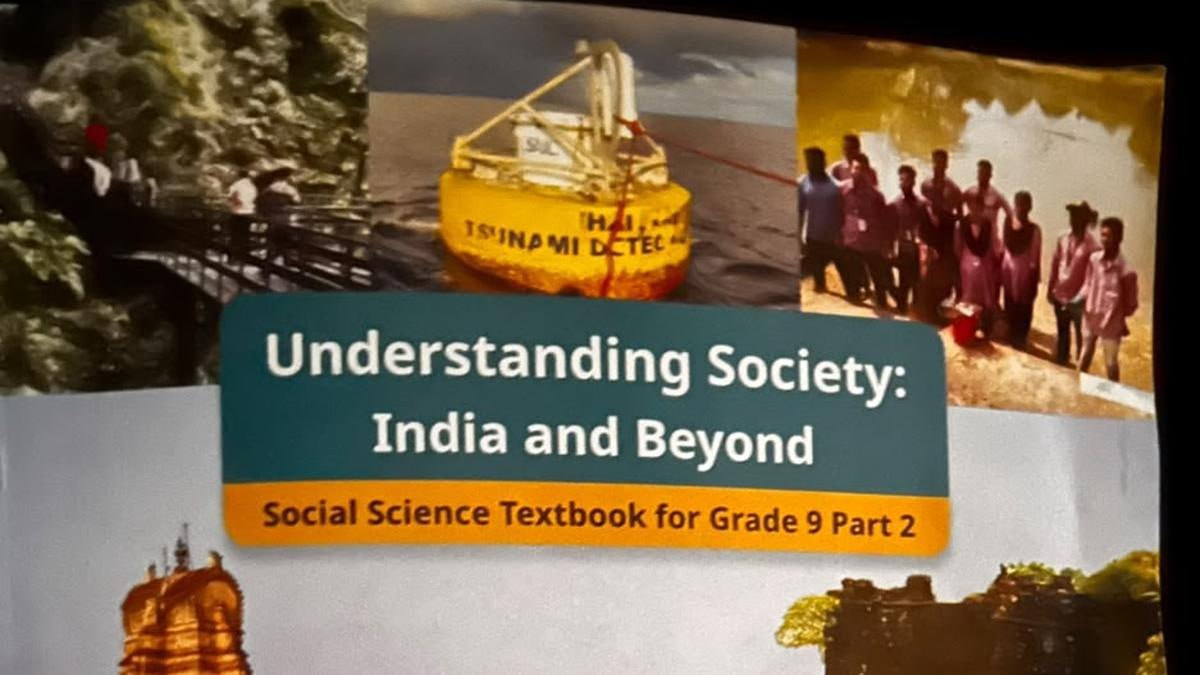
NCERT textbooks have traditionally incorporated both Indian and world history to help students understand major political, social and economic transformations.
The revised Class 9 textbook adopts a stronger focus on the history of the Indian subcontinent, particularly the period between approximately 1000 and 1700 CE.
It examines:
Expansion of political powers into the Indian subcontinent.
Indian kingdoms and communities defending their sovereignty.
Mughal–Sikh relations.
Regional resistance movements.
Alliances and military confederacies.
Economic and political factors behind resistance.
The textbook uses the broader themes of “resistance” and “resilience” to organise parts of medieval Indian history.
Features
Greater emphasis on Indian history
The textbook gives considerable attention to India's medieval political history and the responses of different communities to expanding powers.
It discusses the Indian subcontinent's economic importance, including the role of its fertile river plains and agricultural surplus.
Mughal–Sikh relations
A section titled “Resistance and Resilience” discusses the relationship between the Mughal state and Sikh Gurus.
It refers to events involving: Guru Arjan Dev, Guru Hargobind, Guru Tegh Bahadur, Guru Jahangir and Aurangzeb's reigns; establishment of the Akal Takht; subsequent development of Sikh military organisation.
The textbook presents these developments as part of the evolution of Sikh political and military resistance.
Regional resistance movements
The revised text also highlights regional communities and kingdoms that defended their political autonomy.
One section, “Safeguarding Sovereignty: Resistance, Alliances and Confederacies,” discusses examples such as the Jat uprising of 1669.
It connects such resistance with factors including:
Heavy taxation
Economic exploitation
Political pressures
Religious policies
Local opposition to imperial authority.
Reduced emphasis on European revolutions
Compared with the previous textbook, the new edition reportedly gives less attention to major European revolutionary events, particularly the French Revolution and the Russian Revolution
This represents a change in the relative balance between European/world history and Indian history in the curriculum.
Significance
Greater Indian historical representation
Greater attention to regional kingdoms, communities and resistance movements can help students understand that Indian history was not merely a succession of ruling dynasties but also involved local political agency and social resistance.
Understanding regional histories
The inclusion of Jats, Sikhs and other regional actors can broaden students' understanding of the diversity of political experiences across the subcontinent.
Historical interpretation
Textbooks do more than provide facts; their selection and framing of historical events influence how students understand concepts such as sovereignty, resistance, empire and social change.
Balance between Indian and world history
A key curriculum challenge is maintaining sufficient exposure to both Indian historical experiences and major global developments.
European revolutions, for example, are significant for understanding concepts such as citizenship, republicanism, nationalism, socialism, and modern political institutions.
Challenges
Risk of reduced global perspective
Reducing coverage of major European revolutions could leave students with less background for understanding the development of modern political and economic ideas.
Historical complexity
Medieval conflicts generally involved multiple factors—political, economic, social, territorial and religious. Presenting them primarily through a single explanatory lens can oversimplify historical processes.
Terminological sensitivity
Terms such as “invasions,” “religious motives,” “persecution”, and “resistance” require careful contextualisation because historical actors and conflicts often had multiple motivations.
Need for evidence-based history
School textbooks should distinguish clearly between:
Established historical evidence
Historiographical interpretations
Contemporary perspectives
Political or ideological interpretations.
Curriculum balance
Indian history can be strengthened without necessarily eliminating important global historical developments.
A balanced curriculum can place Indian, Asian and global histories in comparative perspective.
Way Forward
Ensure evidence-based and academically rigorous presentation of historical events.
Present multiple dimensions of historical conflicts rather than relying on a single explanatory factor.
Preserve adequate coverage of major global transformations alongside Indian history.
Give greater space to regional and subaltern histories that were previously underrepresented.
Clearly distinguish historical fact from interpretation.
Encourage students to compare different historical experiences rather than viewing history only through political conflict.
Incorporate diverse sources such as archaeological evidence, inscriptions, literature, administrative records and regional traditions.
Conclusion
The NCERT Class 9 Social Science textbook has been modified in such a way that it has greater focus on Indian medieval history, regional resistance, and sovereignty and resilience. This could increase the historical understanding of students of India's varied past experiences. However, good history teaching involves a balanced curriculum that is grounded in fact and is related to the global context of Indian history. The goal must be that of developing historical reasoning and interpretation, not of increasing or reducing any specific historical area or period.