Background
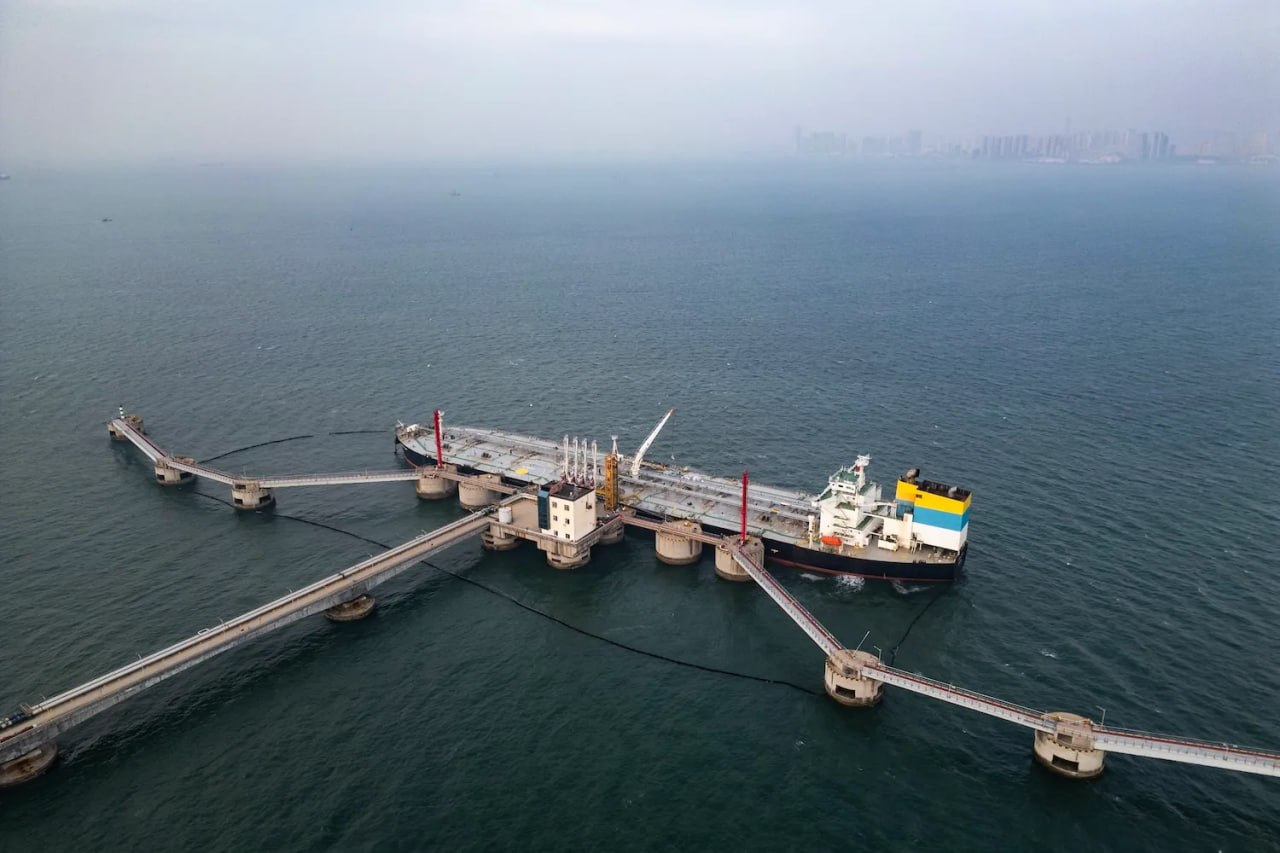
The Strait of Malacca is about 800 km long, connecting the Andaman Sea with the Strait of Singapore.
The Strait of Singapore forms its eastern continuation and links the Malacca Strait with the South China Sea.
Indonesia and Malaysia asserted 12-nautical-mile territorial seas, resulting in overlapping territorial waters in the narrow Straits.
Singapore, despite depending heavily on international shipping, cooperated with Malaysia and Indonesia on navigation safety and maritime security.
During the evolution of UNCLOS, the concept of transit passage was developed for international straits connecting high seas/EEZs.
In 2007, Indonesia, Malaysia and Singapore established a Cooperative Mechanism involving littoral states, user states and industry for navigation safety and environmental protection.
From International Waters to Territorial Sovereignty
The Malacca experience reflects the transition from unrestricted international navigation towards stronger coastal-state sovereignty.
Indonesia’s 1957 archipelagic principle declared waters surrounding and connecting its islands to be Indonesian waters, partly to protect territorial integrity and limit external interference.
Malaysia later adopted a 12-nautical-mile territorial sea, while Singapore supported arrangements safeguarding navigation.
Because parts of the Straits are less than 24 nautical miles wide, the territorial seas of the littoral states meet, leaving no intervening high seas.
Features
Littoral-state cooperation – Indonesia, Malaysia and Singapore jointly manage maritime concerns.
Transit passage – UNCLOS provides a framework allowing continuous and expeditious passage of ships, including warships.
Traffic separation schemes – Help regulate dense maritime traffic and reduce accidents.
Aids to Navigation Fund – Voluntary contributions finance navigation aids, hydrographic surveys and safety projects.
No mandatory tolls – Littoral states do not impose fees on vessels exercising transit passage.
Involvement of user states and industry – Countries and commercial stakeholders using the waterway contribute to its safety infrastructure.
Balance between sovereignty and global commerce – Territorial sovereignty is accommodated while maintaining international navigation.
Why Hormuz Is Different
Hormuz presents a comparable territorial situation because Iranian and Omani territorial waters intersect in parts of the Strait.
However, its political and legal circumstances differ considerably.
Iran has not ratified UNCLOS and has enacted a 1993 requirement for foreign warships to obtain authorisation for passage.
More significantly, Hormuz is closely connected with Iran’s security concerns and its confrontation with external military powers, particularly the United States.
Consequently, navigation arrangements alone cannot resolve disputes rooted in sovereignty, military presence and strategic insecurity.
Challenge
Iran's security concerns are considerably more central than the navigation and environmental concerns that dominated the Malacca–Singapore negotiations.
Iran has not ratified UNCLOS and has historically insisted on greater control over foreign warships passing through Hormuz.
The United States does not necessarily accept arrangements negotiated solely by Gulf littoral states, creating an additional geopolitical obstacle.
The Persian Gulf has multiple competing security interests involving Iran, Oman, GCC countries and external powers.
Hormuz is strategically critical because a major share of global energy supplies passes through the Strait.
Unlike the Malacca settlement, there is no equivalent broad international consensus on the security architecture of Hormuz.
Way Forward
Iran–Oman dialogue can form the foundation for a regional maritime framework.
Establish a multilateral Hormuz Cooperative Mechanism involving Iran, Oman, other Gulf littoral states and major user states.
Separate navigation safety from broader geopolitical disputes wherever possible.
Develop jointly managed traffic separation schemes, navigation aids, hydrographic surveys and emergency-response mechanisms.
Create a voluntary international fund for maritime safety, inspired by the Malacca–Singapore model.
Provide clear rules for commercial vessels and naval vessels, while addressing Iran's legitimate security concerns through negotiated safeguards.
Encourage participation of major maritime stakeholders without converting the Strait into an externally controlled international regime.
Use UNCLOS principles as a reference framework, while recognising the specific legal and political circumstances of Hormuz.
Conclusion
Malacca-Singapore shows that choke points can be regulated by a mix of sovereignty and international navigation rights and cooperation. However, Hormuz is not able to emulate the Malacca model since the dispute that arises in the case of the Hormuz choke point is geopolitical and security-based rather than navigational. There can be negotiations on the issue by Iran and Oman, together with other regional and maritime stakeholders.