What is TEPA and What Sets It Apart?
TEPA is a trade agreement under which both sides provide customs-duty concessions on goods traded between them.
EFTA has offered concessions on 92.2% of tariff lines, covering 99.6% of the value of India's exports to EFTA.
India has offered concessions on 82.7% of tariff lines, covering 95.3% of the value of EFTA's exports.
TEPA contains a dedicated chapter on investment and job creation, making it distinctive among India's trade agreements.
EFTA states aim to facilitate $100 billion of investment in India over 15 years.
The agreement therefore seeks to move beyond cheaper trade towards industrial, technological and investment partnerships.
Areas Where Iceland's Experience Can Benefit India
Geothermal Energy
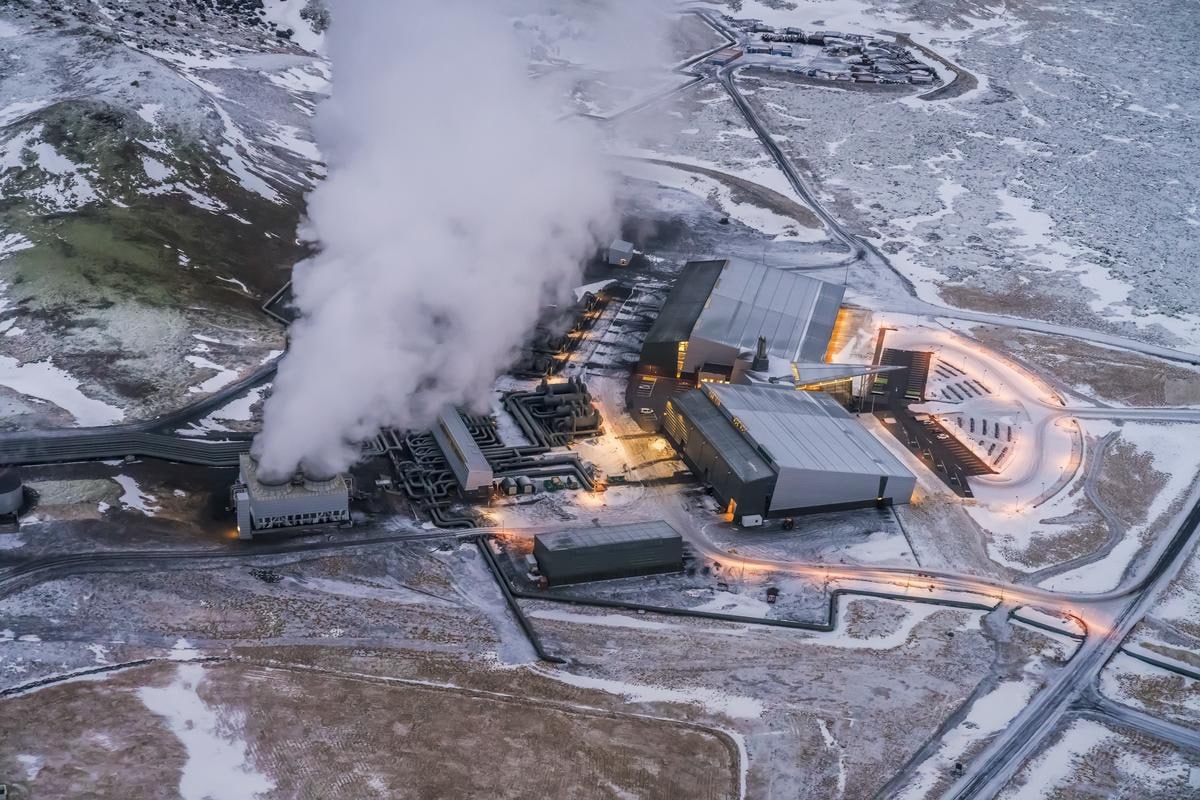
Iceland has extensive experience in the direct use of geothermal heat, particularly low- and medium-temperature heat.
India can potentially apply this experience in the Himalayan geothermal belt.
At Tapri in Kinnaur, Himachal Pradesh, the Indian-Icelandic venture Geotropy is using geothermal heat for fruit drying.
This can help apple growers process and store produce, reducing dependence on immediate post-harvest sales.
Geothermal cooling facilities can further strengthen agricultural storage.
Similar applications could provide energy security to high-altitude and frontier communities where fuel supply depends on vulnerable road networks.
Carbon Capture, Utilisation and Storage
CCUS involves capturing CO₂ from industrial sources and either storing it permanently or converting it into useful products.
India is currently moving towards the pre-commercial stage of CCUS development.
The Department of Science and Technology released India's first dedicated CCUS R&D roadmap in December 2025.
Public-sector enterprises such as ONGC, NTPC and Indian Oil are undertaking feasibility studies and pilot projects.
Iceland's CarbFix technology injects dissolved CO₂ into basalt, where it can undergo mineralisation.
India's Deccan Trap basalt formations provide potentially relevant geological conditions for such research.
Icelandic expertise could therefore contribute through technology licensing, geological assessment, monitoring and joint project development.
Carbon Utilisation and E-fuels
Iceland has experience in converting captured carbon dioxide into useful products such as methanol.
Carbon Iceland, JSW Steel and Bharatia have explored an e-methanol project in Raigad, Maharashtra.
The proposed approach involves combining industrial CO₂ emissions with green hydrogen.
Such projects could support decarbonisation of difficult-to-abate sectors such as steel and chemicals.
Fisheries and Blue Economy
Iceland has developed expertise in: Sustainable fisheries, Seafood processing, Cold-chain logistics, Value-added seafood products, Efficient utilisation of fish by-products
Iceland's fisheries sector demonstrates the potential of using a very high proportion of the harvested fish rather than treating parts such as skin, liver and bones as waste.
For India, better processing and utilisation could generate additional value, employment and exports without necessarily increasing the quantity of fish caught.
India, Iceland and the Arctic
Iceland is a founding member of the Arctic Council and one of the eight Arctic States.
India became an Observer to the Arctic Council in 2013.
India released its Arctic Policy in 2022.
India operates the Himadri research station in Svalbard.
Iceland can provide India with an important bilateral channel for Arctic research, climate science and Arctic governance.
Thus, TEPA can connect India's interests in trade, clean energy, climate technology and Arctic cooperation.
TEPA and EU–India Trade Relations
TEPA should be viewed as complementary to broader EU–India trade engagement, rather than simply as a competing arrangement.
The combination of market access, investment, technology cooperation, European partnerships, and sector-specific expertise can potentially create broader economic opportunities for India.
Challenges
Investment commitment
The $100-billion investment objective is ambitious, and translating it into actual projects will require sustained investor participation and regulatory coordination.
Standards barriers
Indian agricultural and food exports can face stringent sanitary and phytosanitary (SPS) requirements, affecting market access.
Regulatory concerns
Perceptions of regulatory uncertainty can influence the willingness of foreign institutional and pension investors to commit capital.
Logistics
Limited direct shipping and air-cargo connections can increase transport costs and delivery times.
Technology deployment
Advanced technologies such as geothermal systems and CCUS require substantial investment, specialised skills and appropriate geological and regulatory frameworks.
Way Forward
Establish a transparent annual monitoring mechanism for EFTA investment and employment commitments.
Facilitate greater participation of European institutional and pension investors in Indian infrastructure and green-finance projects.
Conduct systematic geothermal resource mapping in Himalayan regions.
Develop joint India–Iceland CCUS research and basalt-storage pilots.
Strengthen cold-chain infrastructure and food-processing capabilities.
Address SPS and other non-tariff barriers affecting Indian exports.
Improve shipping and air-cargo connectivity between India and EFTA countries.
Encourage joint ventures, technology licensing and collaborative R&D rather than focusing only on equipment imports.
Conclusion
The importance of India-EFTA TEPA is not only about tariff reduction. The importance of the treaty lies in whether it will be able to materialise the promised investments in terms of industrial plants and employment generation, technological cooperation through commercial ventures, and market access in terms of sustained exports. In relation to India, TEPA gives an opportunity to use its huge market and developmental needs along with the special technological knowledge of EFTA countries.