Topic
Environment
Latest UPSC current affairs on Environment for Prelims and Mains.
India’s First Soil Carbon Payments to Farmers
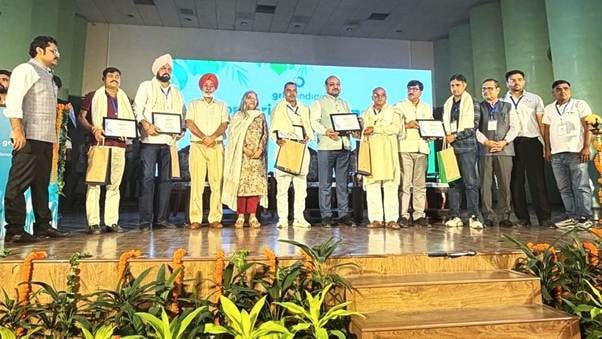
The first carbon payments scheme from India is called the "Aadi program" which provides ₹2.9 crore to more than 2,500 farmers in Punjab and Haryana states for using regenerative techniques such as direct-seeded rice and reduced tilling. Additional money through verified carbon credits (Verra VM0042) is being generated while saving water and reducing stubble burning.
UN sets pathway to tackle ‘inevitable breach’ of the 1.5°C global warming limit
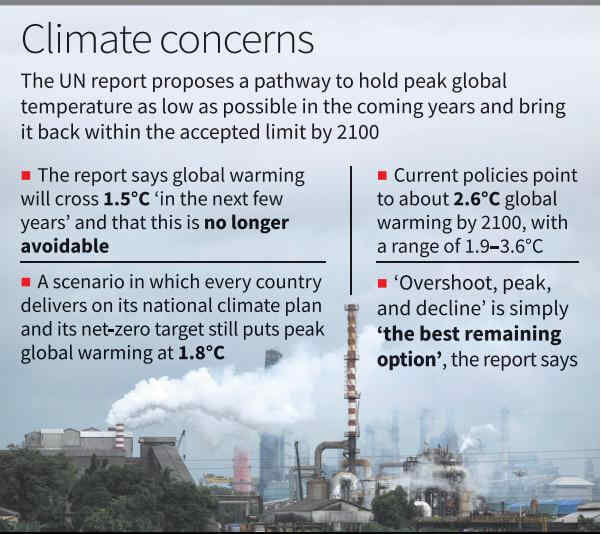
UNEP states that a breach beyond 1.5 degrees Celsius is inevitable and suggests "overshoot, peak and decline" by making deep reductions in greenhouse gas emissions and carbon dioxide removal. Issues faced: tipping points, uncertainty about carbon dioxide removal, climate justice, and complacency. Path forward: shift from fossil fuels, reduce methane, adapt, and climate finance.
Asiatic Lion population rises from 523 in 2015 to 891 in 2025
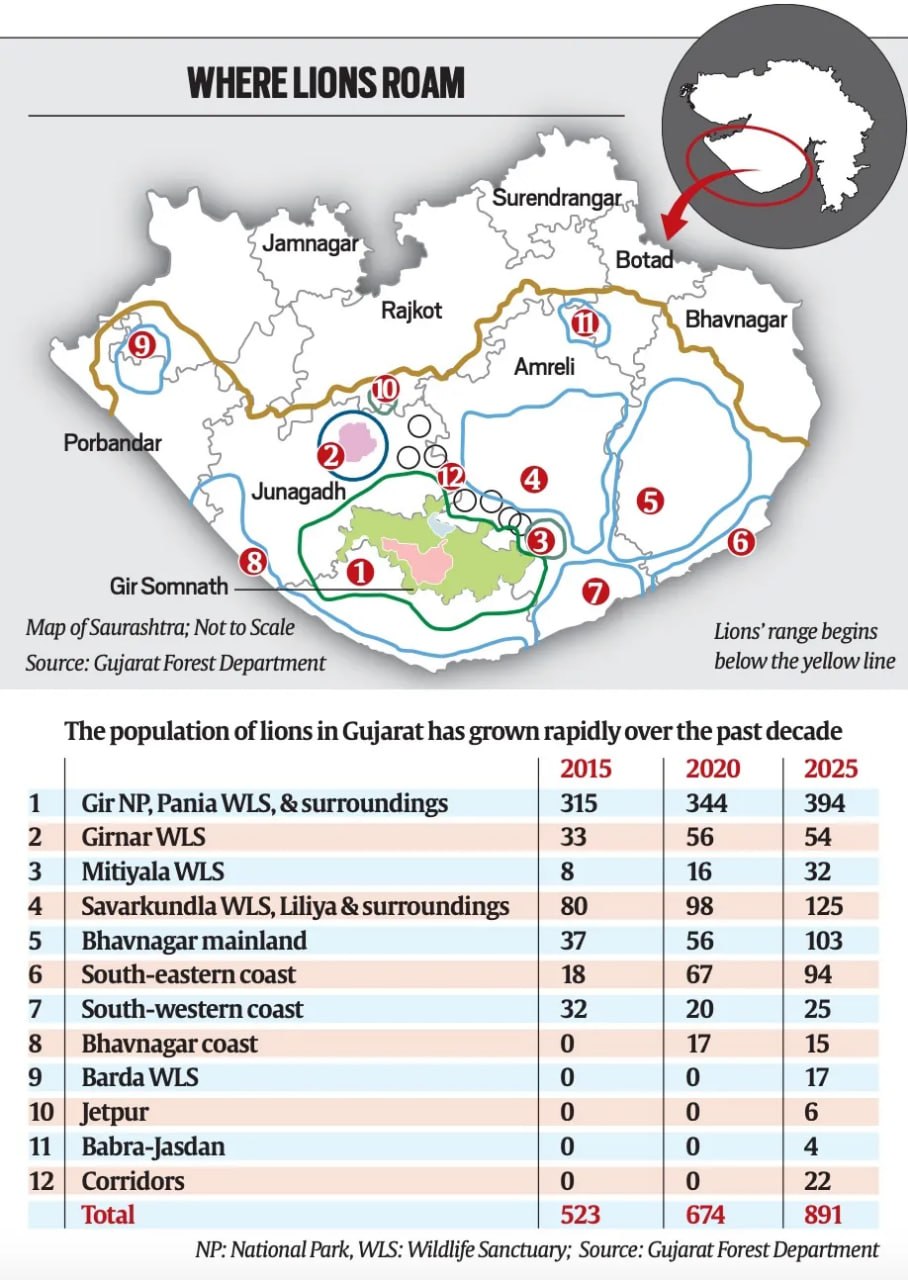
The Asiatic lion population in India increased from 523 in 2015 to 891 in 2025, as conservation efforts under Project Lion (2020) were successful. Nonetheless, keeping all the wild Asiatic lions in one area, the Gir landscape, poses several threats to the species from diseases, habitat saturation, human-wildlife conflicts, and catastrophes.

Glaw Lake Becomes Arunachal Pradesh’s First Ramsar Site
Glaw Lake is the first Ramsar Site in Arunachal Pradesh. Glaw Lake is internationally recognised for its ecological significance due to its location in the Eastern Himalayas. It has high biological diversity and is vital in water conservation and adaptation to climate change. This classification encourages scientific management, public involvement, and ecotourism.

When is Heavy Rainfall a Cloudburst, and When is It Not?
A cloudburst, according to the IMD, is a sudden heavy rainfall of 100 mm or more occurring within an hour in an area of 20 to 30 sq. km. Such phenomena are very common in the Himalayan region, which leads to flash floods and landslides.

Supreme Court Restricts Retrospective Environmental Clearances
The retrospective clearance (ex post facto clearance) of the project refers to the clearance provided to a project after its implementation or completion in the absence of prior Environmental Clearance (EC). According to the Supreme Court, such regularisation in a blanket manner by an Office Memorandum of the executive is unconstitutional.
India Climate Vulnerability: 109 Very High-Risk Districts
Environment Minister Bhupender Yadav told the Lok Sabha on 27 July 2026 that national assessments over ten years have flagged 109 districts as 'very high' climate-risk and 201 as 'highly' vulnerable, with NICRA modelling projecting rainfed rice yields down 47% by 2080. Complete UPSC analysis of NAPCC, NICRA, adaptation finance and the Western Ghats ESA deadlock.

Radio-Tagged White-Rumped Vulture Electrocuted in India
The electrocution of a radio-tagged captive-bred White-rumped Vulture in Mudumalai highlights the urgent need to make power infrastructure and habitats safer for the successful recovery of this critically endangered species.